WHIRLing Again!

You all know by now:  WHIRL stands for What Have I Read Lately.  There are some books I’ve read in the past year that I can highly recommend, but just haven’t had the time to blog at length about them.  Being realistic, I probably won’t get around to reviewing them, but I don’t want you to miss out.
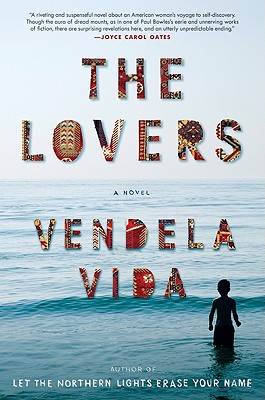
The Lovers by Vendela Vida.  This is a book that I enjoyed so much; I highly recommend it.  I hope this doesn’t sound too pretentious on my part, but I feel like Vida’s writing can only get better, and she is definitely one to watch.  This novel takes place in Turkey when the protagonist goes there on a trip after her husband dies.  Suddenly alone and forced to do things for herself, she flounders a bit, both physically and emotionally.  As we watch her make some surprising, if not poor decisions, we slowly get to know this woman and wonder if she’s ever known herself.

This is one of the best books I’ve read recently for putting me in a place.  Vida evoked Turkey for me and made me want to be there.  This novel is a winner.

Ethan Frome by Edith Warton.  I practically read this classic in one sitting–I was riveted.
 
It’s short, a novella really, and it’s so compelling; I only put it down because I knew I had to get up early the next morning. Which I did, only to immediately pick up the book and finish it! This was, I am sorry to admit, my first experience with Edith Wharton. Shocking, but true.I suppose what hooked me at first was the mystery. The narrator is wondering, and makes the reader wonder along with him, what has made Ethan Frome the bent and broken man he seems to be. The narrator is obsessed with Ethan and so perhaps this is why he can articulate Ethan’s story so well. For Ethan, in turn, is obsessed with a lady, a lady who is not his wife.
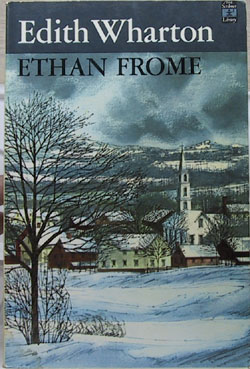
Who knew I’d be swept along in a romantic triangle in a time of restraint and austerity.  And the landscape, a huge character in the story, is a perfect metaphor for the restrained passions of Ethan and his object of affection.  I would be surprised to find anyone who doesn’t like this book.  Almost as surprised as I was at the ending of it!

The Cookbook Collector by Allegra Goodman.  I picked up this book because I read an article in The Guardian that compared it to Franzen’s Freedom, stating that Goodman’s book was just as good, if not better than Franzen’s, but Freedom gets all the attention because the novel, like the author of it, are loud and in-your-face whereas Goodman and her novel are more nuanced and subtle.

Well, I’m not sure I agree with any of that, but I did enjoy The Cookbook Collector.  It takes place in the Bay Area, and follows various people’s lives, one of whom collects, you guessed it–rare cookbooks.  To attempt a cooking metaphor here: at times I thought the author, as cook, threw a few too many ingredients in the pot and the flavors became too muddied; I would have preferred fewer and more distinct characters and subplots.  Having said that, this is a very readable book, and one that I think book clubs would enjoy discussing.

What about you?  What have you read lately?

Should Your Book Club Read The Calligrapher by Edward Docx?

This book was recommended to me by one of my favorite bloggers to use for my Literary Masters book groups.  Although I don’t think I’ll be putting it on my list for next season, I can highly recommend the book for your individual reading pleasure, and you may even enjoy a rousing discussion about it with your personal book club.

Quick plot overview:
The narrator, Jasper Jackson, is a calligrapher by profession.  Living in north London, Jasper has been commissioned by a wealthy American media tycoon to transcribe thirty poems from John Donne’s Songs and Sonnets.  Now if you know little to nothing about calligraphy and the same amount about Donne and his poetry, you are in for a treat.  More about that later, however.

Jasper Jackson is a bit of a womanizer as it turns out, and he doesn’t restrict himself to one amour at a time.  Constancy seems to be a bit of a problem for Jasper.  But then again, Jasper hasn’t really found his true love yet.  Until one day, when he is gazing out his window onto the garden below, where he spies a woman so outrageously beautiful, he compares her to Helen of Troy.  He also calls her, for lack of the words to do her true justice, a “real hottie.”  Immediately he is smitten, no make that obsessed, and it becomes his sole ambition to meet her–and more.

Now, at the start of every chapter, there’s a poem by John Donne, and even if you’ve never read his poetry, you can figure out the gist of what it means and then, and this is the clever part, you will know what’s going to happen in that chapter.  If the way I’ve just described it makes it sound corny or cheesy, that’s my fault because it’s really done well.  Occasionally within a chapter Jasper discusses Donne’s poetry and what it means, or how difficult it is to definitively pin down, but this never comes across as heavy-handed.  Instead, I found myself enjoying learning a bit about this 17th century poet and his work.

This novel is quite funny at times, although at first I felt like I was reading a guy’s novel (I couldn’t get too excited about Jasper’s musings about woman and his wooing of them) and wondered if I would stick with it.  I’m glad I did, not only because it rapidly improved and then easily hooked me, but also because there’s a couple of unexpected twists in the story that lend it depth.  And when considered in the broader context that encompasses Donne’s poetry, one can see how these twists make a lot of sense.  It makes for a very clever, or as the Brits say, a brilliant package.

I highly recommend this book for a fun literary read, and I think most book clubs will find enough in it to carry an evening’s conversation.  I will be keeping my eyes open for more Edward Docx for sure.

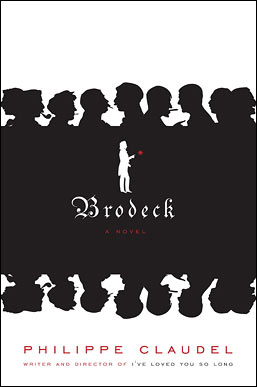
Brodeck’s Report by Philippe Claudel

I chanced upon this book when I was reading about past winners of the Independent Foreign Fiction Prize.  Brodeck’s Report (Brodeck, A Novel in the US) won this award in 2010, but for some reason, it had never crossed my radar.  When I saw that the author also wrote the film I’ve Loved You So Long, I put down all my other reading to pick up this novel.  If you haven’t seen I’ve Loved You So Long, you are really missing out.  And if you have seen it, you know exactly what I mean.

Brodeck’s Report did not disappoint me.  Yet, I hesitate to recommend it to all.  (I think I’m suffering from being accused of reading only heavy or depressing books, an accusation that is not true.  Well, not 100% true, anyway.)  How do I even describe this book?

Reading it was like being in a dream.  I wasn’t exactly sure where the setting was.  A tiny isolated village somewhere in the fluid-boundary zone of Europe, around the Germany/France border or the Austria/Hungary border.  The time is post WWII, although this, too, is fluid as we follow the meanderings of the narrator’s memory as he tells us his story.  The characters are sometimes real, but hard to pin down.  They felt sort of ephemeral to me.  And at times I felt I was reading a fable or allegory.

But at the same time, I couldn’t put this book down, and the messages it carried were very real and clear.

Quick plot summary: Brodeck has been charged with writing a report about the events surrounding the death of a nameless character he refers to as “the other.”  The people who have ordered him to write the report have actually murdered “the other,” and they intimidate Brodeck into cooperating.  However, as a means of resistance, Brodeck writes two reports, and the book we are reading is the “true” one.  Or so one would think.  Make of that what you will; at any rate, Brodeck starts his narrative with this disclaimer:

“I’m Brodeck and I had nothing to do with it.  I insist on that.  I want everyone to know.  I had no part in it, and once I learned what had happened I would have preferred never to mention it again, I would have liked to bind my memory fast and keep it that way, as subdued and still as a weasel in an iron trap.”

Ah yes, but it is terribly difficult to “bind memory,” and in the midst of writing his report, Brodeck reminisces about his time in a concentration camp, from which he has recently returned.  Resisting his captors was not an option for Brodeck at the camp.  Instead, he performed the role that the sadistic guards demanded of him: he acted, quite literally, like a dog.  This he did in order to survive and return home to his beloved Amelia and Fedorine.

As it turns out, Amelie has not been left unscathed in the village as she awaited Brodeck’s return.  And it isn’t just the invading soldiers who are culpable; local villagers are to blame as well.

As Brodeck writes his reports, it becomes obvious to him and to the reader that he is in danger.  The villagers who murdered “the other,” and who have ordered Brodeck to write his report, do not trust him.  “The other” was murdered because he held up a mirror to each person in the village.  Now we fear Brodeck will meet the same end for shining a light on the villagers’ crimes.  Philippe Claudel is a master at building tension; I found this book to be a literary page-turner as I read furiously to find out what would happen.

Questions of who is to blame, who is complicit, how to survive, what we choose to remember, whether we even can choose to remember, how history becomes “fact,”–all this and much more is in this intriguing novel.  It would generate a great discussion for a book club, but I’m not sure everyone would enjoy reading it.  If heavy subjects don’t put you off, and if you’re drawn to atmospheric writing, then you’ll probably like it.  Whether you read it or not, do not miss the film I’ve Loved You So Long.  And bring your tissues.

Orange Prize Short List Announced!

Oh dear.  The short list for the Orange Prize has been announced, and I didn’t like three out of the six novels on the list.  You’ll recall that my Literary Masters book groups read last year’s winner, The Lacuna by Barbara Kingsolver.  That was a wonderfully literary novel, which I blogged about here.

This year’s short list is as follows:

The Tiger’s Wife by Tea Obreht.  Here we go.  I can just see this book sweeping the literary awards, and as you know, it left me…underwhelmed.  I blogged on it here.

Great House by Nicole Krauss.  Ugh.  I blogged about it here.

Room by Emma Donaghue.  I know that I said I wouldn’t read this book, but I did.  And I found it creepily compelling for the first half, and then I thought it fell apart in the second half.  Yes, I, like others, found the boy’s voice believable and, as I said, compelling, but that wasn’t enough to sustain me.

Grace Williams Says It Loud by Emma Henderson.  I haven’t read it, but it takes place in an institution for the mentally ill, and is about a relationship between the two patients.

The Memory of Love by Aminatta Forna.  I haven’t read this either, but it’s evidently about the Sierra Leonean civil war.  Or the aftermath.  Or both.  I’m sure I’d learn a lot anyway.  I think I may read this one.

Annabel by Kathleen Winter is about a hermaphrodite whose parents’ choice of surgery has massive consequences in the child’s life.  I may read this one as well.

One book that did not make the list that I have on my TBR shelf is Jennifer Egan’s A Visit from the Goon Squad.

For more on the Orange Prize and its short list, click here.  And let me know what you think–which novel do you feel should win?

I Haven’t WHIRLed in Ages!

As you know, WHIRL stands for What Have I Read Lately.  Recently I asked my Jane Austen Literary Salon what books (besides Jane’s six novels that we are reading and discussing in the salon) they have enjoyed lately or what books are on their all-time faves list.  Here’s what they said:

Moby Dick by Herman Melville, “because the entire universe is contained in it, and it’s still so compelling today.”

Wow, makes me want to re-read that wonderful novel!  The last time I read it was with the fabulous Professor Zimmerman in my 19th Century American Lit class.

The Poisonwood Bible by Barbara Kingsolver, “an amazing piece of literature.”

Yep, one of my favorites, too.  I am a big fan of Kingsolver; as you know, one of my Literary Masters book selections this season was The Lacuna, another winner.


Never Let Me Go by Kazuo Ishiguro, a “creepy page-turner with amazing insight into people’s psyches as well as very well written social interactions.”

Hmm…makes me want to pick this up again.  I started it awhile ago, and found it too…yes, creepy!…to continue.  Perhaps I’ll give it another try.

Austenland by Shannon Hale–“I listened to the book on tape on a car trip and have not laughed so much in a long, long time.”

Well, I hope you weren’t the one driving!  I tend to close my eyes when I’m laughing that hard.


The Particular Sadness of Lemon Cake by Aimee Bender.  “I have not read this, but am fascinated by the concept of tasting the emotions of the cooks who prepared the foods eaten.”

Hmm…I’m not sure it counts if you haven’t read the book you’re recommending!  The same concept was explored in Chocolat, no?


 The Thousand Autumns of Jacob de Zoet by David Mitchell and The Brief and Wondrous Life of Oscar Wao by Junot Diaz “are wonderful books.  Both are historical fiction, although Oscar Wao is much more recent.”

Two fantastic books, I do agree!  Literary Masters book groups read The Brief and Wondrous Life of Oscar Wao last season, and everyone loved it, and we are reading The Thousand Autumns of Jacob de Zoet right now!

“The Bone People by Keri Hulme for fiction.  Traveling with Pomegranates by Sue Monk Kidd and Ann Taylor Kidd for non-fiction.”


I haven’t read either of these books, but I like the title of the non-fiction book.

“The best recent piece of fiction is The Elegance of the Hedgehog by Muriel Barbery.  I like her as well as Jane which is saying a lot.  She’s also written Gourmet Rhapsody which is not as good but still very good indeed.

Very interesting…I have heard mixed reviews of The Elegance of the Hedgehog.

“There are three non-fiction books by Michael Lewis that I have read this year and that I am wild about.  My favorite I guess is The Big Short, which is the most intelligible and readable account of what caused the current financial crisis.  The other two are Moneyball and The Blind Side, which are about sports but there’s a whole lot about people and prejudice and analytical thinking.” 

I just took The Big Short out of the library; I can’t wait to read it!


Hey, there’s more to WHIRL about, but that’s all for now.  Stay tuned for my next WHIRL post.  And don’t forget to tell me what you’ve been reading lately!

The Tiger’s Wife by Tea Obreht

I sometimes joke, with just a kernel of truth, that the secret to happiness is low expectations.  And perhaps it’s the same with books.  I had heard so much buzz about Tea Obreht’s debut novel The Tiger’s Wife, I was excited to crack it open and ready to devour it.  The NY Times raved; click here to read that review.  The Christian Science Monitor positively gushed; click here to read that review.  Even Book Pages, which I picked up at my local library, led me to believe that I had, absolutely had to read this book.

So I did.  And I must say, I was slightly disappointed.  Perhaps it was just my “reading mood”–I really felt like curling up with a long, atmospheric narrative into which I could escape for awhile.  Instead, I found myself laboring to comprehend a novel that is structured like a set of Russian dolls, or as Kapka Kassabova calls it in her review in the Guardian (click here for review), a “matryoshka-style narrative.”

I read Kassabova’s review after I finished The Tiger’s Wife; I was looking for some explication of its many references.  I wish I had read the review before however, as it did shed some light on the novel for me.

Quick plot review:  Natalia is narrating the story.  She is in an unnamed Balkan country that has recently emerged from the ravages of civil war.  Considering that the author was born in Belgrade, I just assumed the setting is, or could be, the former Yugoslavia.  Natalia is a doctor who has crossed the new border into what was once her own country, but is now former enemy territory, to bring vaccines to a mainly suspicious and resistant audience.  An arduous physical journey, this is also quite an emotional trip for Natalia because she has just found out that her beloved grandfather has died.

So that’s the frame of the book.  But now it’s the reader’s turn to travel as Natalia takes us on many journeys by way of stories that her grandfather has told her, the two main tales being about a tiger that is, or is not, a lot like Shere Khan from Kipling’s The Jungle Book, and a deathless man.  There are many other characters, and other tales also; at times I felt like I was reading short stories, but I knew that (I hoped that?) they would all come together in the end.

I think they did, but not as convincingly as I was hoping they would.  By the time I closed the book, I was just glad to be done with it.  Oh, that sounds harsh, and don’t get me wrong; this is a very good book in many ways.  Obreht’s writing is seriously impressive, and she does know how to tell a story, building suspense along the way.  However, at times I felt like I had entered a maze of fabulous tales reminiscent of…what?

I don’t know what.

And perhaps that was part of my problem.  I felt like I was missing a lot by not understanding what I assumed were many references–cultural, folkloric, religious, and otherwise.  So I stumbled around the maze and emerged dazed, and ultimately a little disappointed.

Should Your Book Club Read A Room With A View by E.M. Forster?

An Edwardian comedy of manners in the mode of Jane Austen, this little gem can be read as a simple love story–sweet, endearing, and a glimpse back in time.  Yet, dig deep, and you will find this book to be very profound.

Quick plot review:  Young and innocent Lucy Honeychurch has traveled from her country home in England to the land of art and passion–Florence, Italy–with her older cousin and chaperone, Charlotte Bartlett.  They arrive at the Pension Bertolini, run by a Cockney from London, to find that their room has–no view!  Two other guests, Mr. Emerson and his son George, offer to swap rooms, as theirs has a view and “women like looking at a view; men don’t.”

Charlotte Bartlett is horrified.  How very improper!  If they accept Mr. Emerson’s generosity, and let’s face it, Mr. Emerson is really not the sort of person one is used to associating with, they will be obligated to him.  And Charlotte, who must protect the purity of her charge Lucy, cannot allow that.

Yet Mr. Emerson persists and asks the questions which is perhaps being asked by the book itself–addressed to everyone about everything–“Why?”

We tour Florence and its surroundings with Lucy and the other characters from the Pension Bertolini and witness a murder on the Piazza Signoria.  But what can this mean? the reader wonders.  Thank goodness Mr. Emerson’s son, George, was there to rescue Lucy when she fainted from her shock.  Not so, thinks Lucy.  Something has happened on that piazza, but not only to the poor Italian who was stabbed.  Something has happened to Lucy–and she is changed forever.

What has happened to her, you ask?  Well, that’s something your book club can–and should–discuss at length.  For this scene (and Forster, like Jane Austen, writes in beautifully rendered scenes) is central to the book–on many levels.  For this book is about so much–

Yes, it’s a coming of age story on one level.  But not only for Lucy.  This was a time of tremendous change in England, when the gentle countryside was being invaded by urban grit, industry was crowding out agricultural life, and the class system was becoming destabilized.  So you can read the novel as a coming of age story for England itself as it moved, inexorably, from the Victorian era into the modern age.

Lucy returns to England and becomes engaged to Cecil.  All right, I must say, Forster rivals Jane Austen for his characters, and any book club should take each one and talk at length about him or her.  Cecil is priceless.  We know he’s wrong for Lucy–we know Lucy is in love with George Emerson–but will Lucy do anything about it?  Or will Fate step in?  Ah, yes, another question running through this novel–is there such a thing as Fate?  And going a bit further, does God exist?

I don’t want to give anything away, so I’ll stop with the plot review here, but if your book club does read the book, pay close attention to Forster’s writing.  For example, see how the imagery of light versus dark is so prominent in the novel, and how it carries the theme of “coming of age” throughout the story.  One can do a wonderful psychoanalytic reading of this novel, digging deep into the unconscious layers.

Pay attention to nature, and how it is being portrayed.  What is the importance, for instance, of the scene at the Sacred Lake, when Mr. Beebe, a clergyman, removes his clothes and prances around?  Pay attention to the roles that art and music play in the story.  And pay close attention to the settings–and how they carry the meaning of the story to the reader.

And, whatever you do, pay very close attention to the muddle.  As I said above, I think this book is quite profound.  It’s full of religion, art, philosophy, and more.  But if you miss it all, just take one little pearl of wisdom from it–and it regards the muddle.  One of my favorite lines in literature is “only connect” from Forster’s Howard’s End, and now I have another favorite line from Forster’s A Room With a View–“Beware the muddle.”

If you, or your book club, reads A Room With A View, enjoy! and let me know what you think!

Orange Prize for Fiction Long List Announced!

The season of literary awards is off to a brilliant start!  The Orange Prize for Fiction–in its 16th year of celebrating women writers–has announced its long list.  On it you’ll find twenty wonderful books to keep you turning pages until the short list is announced on April 12th.  I can’t wait to see that list!

The winner will be announced on June 8th.  Last year’s winner was Barbara Kingsolver for The Lacuna, and as you know, Literary Masters book groups and literary salons kicked off our season with that excellent novel.  Let’s see if this year’s winner lands on Literary Masters’ list for the 2011/2012 season.

To see the long list and for more on the Orange Prize, click here.

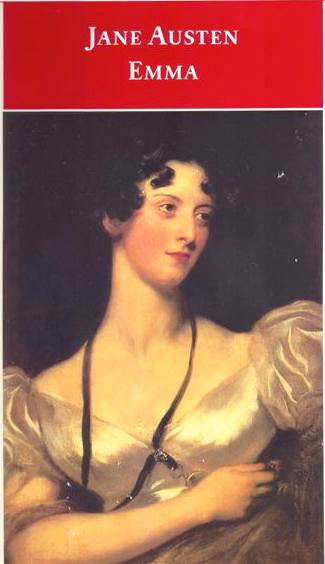
Should your Book Club read Emma by Jane Austen?

As you know, I am currently running a Jane Austen Literary Salon, and we just finished discussing Emma, the fifth of Jane’s six novels that we’re reading.  One of the members, let’s call her Diane, had to miss last month’s discussion of Mansfield Park, but she had a good excuse–her first grandchild was born!  And guess what Diane did while helping to care for her new granddaughter?  She read Emma out loud to her–I love it!  A little Janeite in training!

So, should your book club read Emma?  Are you looking for a classic?  Are you looking for one of Jane’s novels to read?  I can recommend Emma for the individual reader and for a book club, but I have to be honest here…this is not my very favorite of Jane’s novels.  Don’t get me wrong–it’s a wonderful, sometimes hilarious novel, with much to appreciate on many levels.  I just happen to prefer Mansfield Park (usually everyone’s least favorite), or Persuasion.  But that’s just me.  Emma is usually everyone else’s favorite, along with Pride and Prejudice.

If you do read Emma, there’s lots to discuss.

You probably know the plot, or some of the plot.  Emma is rich, spoiled, and rather self-absorbed.  She’s also very snobbish, but not when it comes to her new friend and pet project, Harriet.  Harriet’s class and rank are hard to pin down, as she has never known her parents–she is “the natural daughter of somebody”–and has lived at Mrs. Goddard’s school.  Emma, who sees the world as she would like it to be rather than how it is, decides with no evidence whatsoever that Harriet must be the daughter of a gentleman and therefore deserves to marry a gentleman.  But which gentleman will it be?  And will that chosen man see Harriet the same way Emma sees her?  Emma sets her sights on the perfect man (or men?) for Harriet and the hilarity begins!

There’s much more to the plot, but suffice to say that it reads like a Shakespearean comedy with all the confusion of who’s in love with whom, and who’s falling out with whom and who will end up with whom.  As I said, it’s quite funny, but there’s an undertone of serious business going on, and the careful reader will pick up on that.

The serious business of marriage, for instance.  Your book club will have a grand time discussing what this novel is saying about romantic love and marriage.  The class system looms large in this story, and impacts everyone and everything–you can see what you think the novel is saying about class and rank in Jane’s day.

Actually, the list of what you can discuss would be too long to list here.  How genders are being played with in the story, and what this means, for instance.  Or if Knightley has “proper pride” and whether he is an ideal man.  Or how Jane’s use of free indirect discourse impacts the reader’s view of the characters and plot.  Or what to make of the themes of duty, the individual versus society, education, and authority, to name a few.
You could spend hours just talking about the characters, like Emma’s father, a pathetic hypochondriac, or the inimitable and insufferable Mrs. Elton, one of the more loathsome characters in all of English literature.

I read and re-read Jane’s novels because I love her use of language.  She is incomparably brilliant and I am in awe as I read.  I also read her because I appreciate how there seem to be so many different, yet simultaneous, discourses in her novels.  In our Jane Austen Literary Salon, we are trying to get to “know” Jane–through her texts, of course.  But this is tricky, as she can be very slippery–you think you understand what the text is saying only to find it’s saying something quite different elsewhere.

Bottom line, Jane’s novels can be read on many levels, which may be a key to her staying power.  Have a go with Emma and let me know what you think.  No cheating by just watching the movie, however!  As beautiful as the films of all Jane’s novels are, they do not compare to reading the books–I assure you!

The Yacoubian Building by Alaa Al Aswany

For those of you short on time, I will cut to the chase:  Yes, read this book.  I couldn’t put it down.  Should you choose it for your book club?  Yes, with reservations.

This novel was published in 2002 but takes place in Cairo, Egypt, around the first Iraq war, way back at the start of the 1990’s.  Written by an Egyptian, it is a slice of life–well, actually several slices of different lives–of people who are tied to each other via The Yacoubian Building.  Yes, the building is the main character of the novel.  Yes, it is a metaphor for what Egypt has gone through in its recent history.  However, I don’t think the building itself looms as large in this story as the glass room did in Simon Mawer’s novel of the same name, reviewed here.

The Yacoubian Building follows the lives of several different characters who are struggling to survive the Cairo of their present, as opposed to their past.  For the past is gone in a blink (or in a coup), and those who cannot adapt, die.  There is Zaki Bey, for example, whose father was one of the richest men in Egypt–before the revolution.  Now Zaki is reduced to prancing around like a playboy while fighting with his sister over their inheritance.  There is Kamal el Rouli, who grew up poor, but who is now in a position of power to exhort money from those who cannot escape his clutch.  There is Busayna, a innocent young girl whose mother encourages her to do whatever it takes in order to bring home money to help feed the family after the man of the house dies.  And there’s many more.  Like the fundamentalist jihadists.  And the homosexual journalist.  (There’s a lot of sex in this novel, but none of it gratuitous or “in your face,”; still it caused quite a stir in Egypt when it was published.)

For anyone who has ever been to Cairo, you know it is a place that teems with people, and this novel is teeming with characters, so much so that there is a helpful “Cast of Characters” at the front of the novel.  Don’t let that intimidate you, though.  The writing is so good, and the characters so well drawn, you will have no problem remembering who they are and what they are going through.

Now my gripe:  I wasn’t happy with the ending of the novel.  In fact, I said “What?  That’s the end???” out loud to my book.  I then met with my personal book club, and I felt a bit better after discussing it with them.  Some light was shed on the story, like the “Big Man” being Mubarek.  That had gone sailing clear over my head!  It helps to have some knowledge about Egypt’s politics, past and present, and it helps to discuss it with others who can help read between the lines and decode some of what the author has written. 

So, no surprise here, if your book club is willing to put some effort into the discussion, this book can be a great selection for you.  If your book club just likes to “show up and chat,” you may have a much shorter evening, unless your members are already quite knowledgeable about Egypt.

This book is fascinating to read now, considering all that’s going on in Northern Africa and the Middle East.  And the author, Alaa Al Aswany, has been quite outspoken during the recent revolution.  There is another book by the Egyptian nobel laureate Naguib Mahfouz entitled Midaq Alley, which is often compared with The Yacoubian Building.  I read it a few years ago and liked it, but not as much as this novel.  You should read both and let me know what you think.