Literary Masters: The List!

Your long wait is over!  The 2013/2014 Season of Literary Masters is officially launched!  You will find the reading list below.  As you’ll recall, I allowed my LM members to vote this season; they chose our eight titles from a long list of books.  Everyone had fun with this, although making a decision wasn’t easy!  First, here’s the long list:
  
Fiction Category: (I asked members to vote for six out of the following titles; please note that the prizes and awards are for the author, not necessarily for the title listed below.)

  1. The Son by Philipp Meyer (Guggenheim Fellowship)
  2. The Lowland by Jhumpa Lahiri (Pulitzer Prize for Fiction, Hemingway Foundation/PEN Award, O. Henry Award)
  3. The Woman Upstairs by Claire Messud (PEN/Faulkner Award for Fiction nomination)
  4. Americanah by Chimamanda Ngozi Adichie (MacArthur Foundation Fellowship, Orange Prize for Fiction)
  5. The Dinner by Herman Koch; translated by Sam Garrett (Publieksprijs Prize)
  6. The Burgess Boys by E;izabeth Strout (Pulitzer Prize for Fiction)
  7. The Round House by Louise Erdrich (National Book Award for Fiction, Guggenheim Fellowship, National Book Critics Circle Award for Fiction)
  8. How to Get Filthy Rich in Rising Asia by Mohsin Hamid (Man Booker Prize nomination)
  9. The Innocents by Francesca Segal (National Jewish Book Award for Fiction, Costa First Novel Award, Women’s Prize for Fiction nomination)
  10. The Orphan Master’s Son by Adam Johnson (Pulitzer Prize for Fiction)
  11. We Are All Completely Beside Ourselves by Karen Joy Fowler (California Book Award Silver Medal, PEN/Faulkner Award nomination)
  12. Telex from Cuba by Rachel Kushner (National Book Award finalist)

Oldie but Goodie Category: I asked members to vote for one of the following titles:
  1. Crossing to Safety by Wallace Stegner
  2. A Lesson Before Dying by Ernest J. Gaines
  3. A Dry White Season by Andre Brink
  4. Age of Innocence by Edith Wharton
  5. All the King’s Men by Robert Penn Warren

Non-fiction Category: I asked members to vote for one of the following titles:
  1. Under the Banner of Heaven by Jon Krakauer
  2. Lean In by Sheryl Sandberg
  3. God’s Hotel by Victoria Sweet
  4. The Season of the Witch by David Talbot
  5. The Worst Hard Time by Timothy Egan

How would YOU have voted?  Keep reading to find out how Literary Masters members voted!

 
 The 2013/2014 Season of Literary Masters Book Groups and Literary Salons Reading List is:

 
October: Americanah by Chimamanda Ngozi Adichie
November: The Woman Upstairs by Claire Messud
December: We Are All Completely Beside Ourselves by Karen Joy Fowler
January: Crossing to Safety by Wallace Stegner
February: The Innocents by Francesca Segal
March: Telex From Cuba by Rachel Kushner
April: God’s Hotel by Victoria Sweet
May: The Lowland by Jhumpa Lahiri
 
So grab your reading glasses and join us for another fabulous season of digging deep into literary treasures!
 
To find out more about Literary Masters book groups and salons, or if you’d like to join us, please visit my website: www.literarymasters.net

  1. Publieksprijs Prize
    Publieksprijs Prize

An Experiment in Democracy!

If you’re in one of my Literary Masters book groups or salons, you know that whether or not you like the book we’re discussing is of absolutely no importance.  I’ve made you one promise: I will not make you read junk.  We read literary treasures that allow us to ‘dig deep’ and learn about ourselves, others, and the world around around us.

However, this 2013/2014 season, I am trying something new.  I put out a long list of book titles and asked my Literary Masters members to vote for the eight books they’d like to read.  What fun!  If I were a psychologist (perhaps in another lifetime), I would have a field day with this.  One thing is for sure: it is an impossibility to please all the people all the time.  I didn’t even have one book group that voted unanimously.  Just goes to show–you don’t join a book group to like what you’re reading.  You join a book group to be open to the new, to learn, to grow, and to connect with others.

So, what titles were on the long list?  And what titles ended up on the final 2013/2014 Literary Masters reading list?  Stay tuned and all will be revealed…

A Venn Diagram of Sorts

I am supervising teachers this summer, and so I sat in on an English class the other night where the instructor was going over Venn diagrams.  You remember those: two circles that connect with an area in the middle.  The middle part is what the two circles have in common, while the outer, separate part of each circle holds what is unique to that circle, and therefore holds each circle’s differences from the other circle.  Venn diagrams are commonly used to teach the organizational concept of compare and contrast.

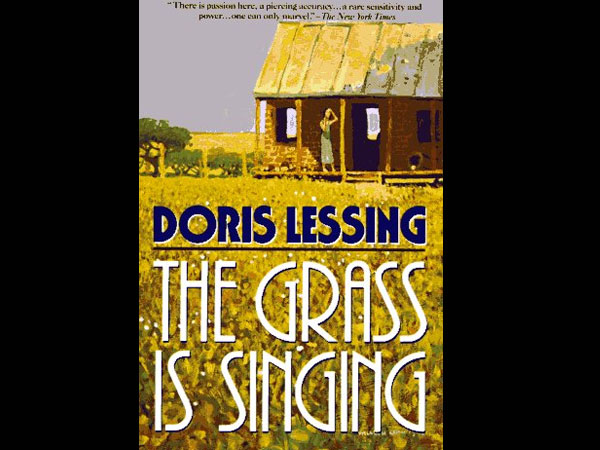
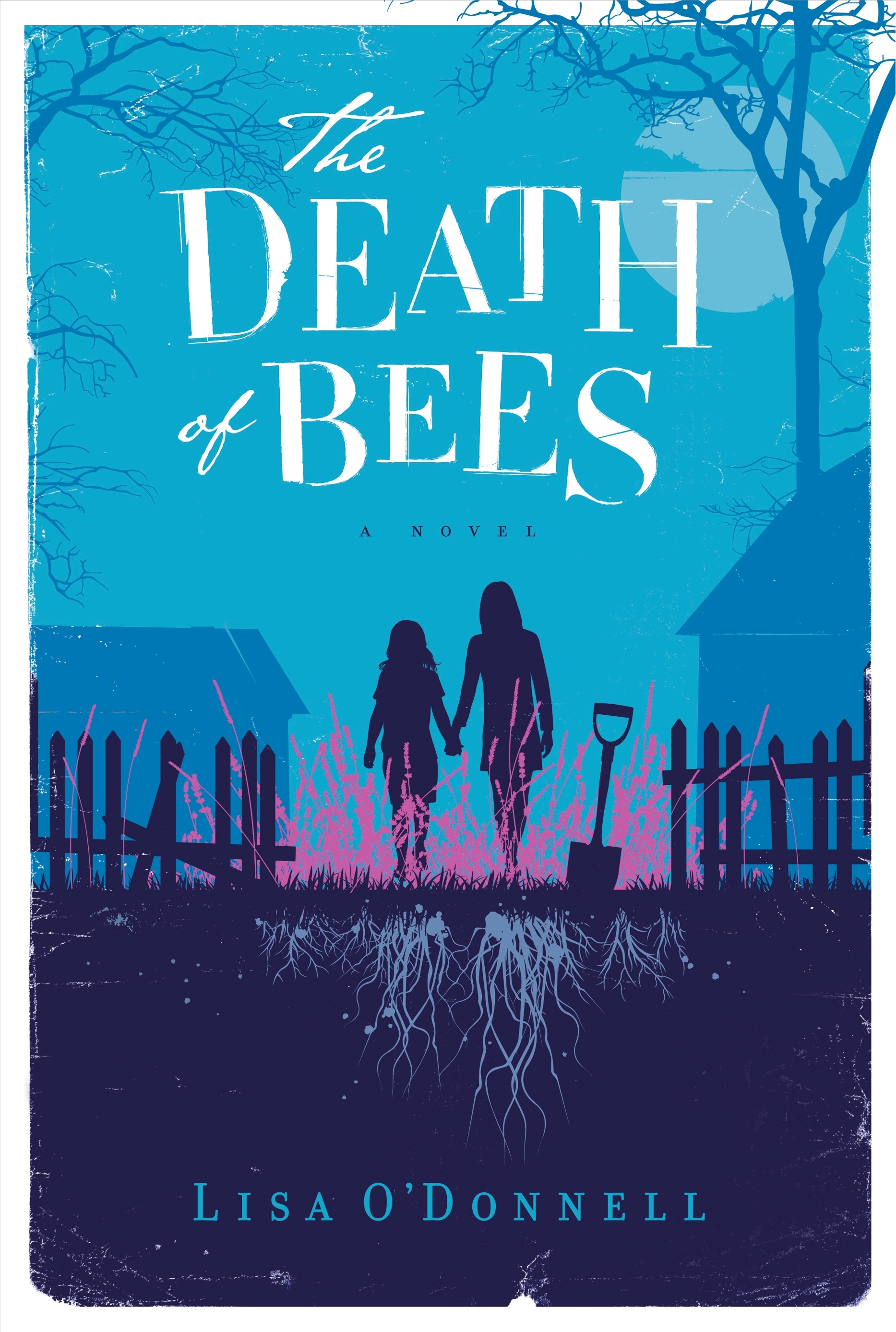
“So what?” did I hear you say?  Well, I just finished two very different books that had me pondering over what they had in common.   (You see the connection now?)  One book is called The Grass is Singing by Doris Lessing and the other is The Death of Bees by Lisa O’Donnell.  If one measure of a good book is that you look forward to returning to it after you’ve put it down,  these are darn good books.

I always wanted to read Doris Lessing’s work, but The Golden Notebook intimidated me by its girth. So, while browsing the “L” shelf at the library, I came upon her first novel, The Grass is Singing, written in 1950.  The book jacket said it takes place in “a sleepy South African town,” and that was enough for me; I was sold.  (It’s summer, so I love to read books set in far away, usually hot places.)

Reading The Grass is Singing is kind of like watching a train wreck about to happen.  From the first few pages you know that Mary Turner has been murdered and that Moses the houseboy has confessed to the deed.  So there’s the wreck.  Now you spend the rest of the book watching how and why it happened.

Although at times I felt like Lessing could have used an editor to help her with her sentences (I can’t believe I am saying that about a Nobel laureate!) and I wondered if her later works improved with the author’s experience and maturity, I was mesmerized by this book.  Lessing brings the reader inside the psychological breakdown of Mary Turner, an experience so real and painful–yet utterly compelling–that it leaves you both fascinated and exhausted.

Warp-speed plot summary: Mary Turner, young, white, and naive, has actually stepped out of the 1940’s constrictions on her gender, but doesn’t realize that her happiness is unusual.  Thus, when she hears her more conventional colleagues gossiping about her not being married, Mary falls prey to society’s expectations of her and she marries the first available man that comes along.  Unfortunately, that man is a not-very-successful farmer who brings Mary from her urban life to live in a hovel in the bush.  He may as well have brought her to Mars, and the changes her new, alien environment wreaks upon her have devastating consequences.

I would recommend this book for book groups because there is so much to discuss, especially if you read it through a post-colonial lens (which you know I like to do).  The novel caused quite a sensation when it was published, which won’t surprise you, so that would be a long conversation all by itself. Just think how we used to look at white versus black.  At men versus women.   At Europe versus Africa.  And then you can discuss whether much as changed.

You can talk about how a white British woman wrote this book, and what meaning the book carries due to the author being a white British woman.  Who does the author give voice to?  What is the author’s intention, and who is her intended audience?
 
The theme of identity is pervasive, and one angle through which to view this is the prisons we make for ourselves, the chains we allow to bind us.  Physical as well as mental and emotional prisons.  Spaces, environments–these all play a large role in the story.

One thing that I would love to discuss with someone–so if you read this book, feel free to contact me–is why it is titled as it is.  The reference is to a T.S. Eliot poem, but why this line?  Why this poem?  What does it mean?

Another intriguing title is that of Lisa O’Donnell’s new novel, The Death of Bees, which came onto my radar because it won the Commonwealth Prize.  For more on that prize, click here.  This is a quick read, absolutely perfect for this summer.

Warp-speed plot summary: Marnie and Nelly’s parents are dead.  Apparently Marnie or Nelly killed Gene, the father; Izzy, the mother, subsequently hanged herself.  Rather than become wards of social services (we are in a very poor area of Glasgow, Scotland), Marnie and Nelly bury their dead parents in the backyard and tell everyone that they’ve gone to Turkey.  No one really cares anyway; Gene and Izzy are drug addicts and appallingly neglectful parents, so anything they do doesn’t surprise anyone.

Lennie, the gay outcast from next-door, takes pity on the girls and becomes a surrogate parent to them.  This seems to be a good solution until the girls’ grandfather–Izzy’s dad–shows up looking for his daughter.  Uh oh.  And Izzy and Gene’s drug supplier shows up looking for his money.  Uh oh. And Lennie’s dog keeps digging in the garden.  Uh oh.

This book is not perfect (but then, what book is?  Oh, we could have a long discussion about that).  However, I couldn’t wait to find out what happens to all the characters in this dark and charming (yes, dark AND charming) story.  The voices of Marnie and Nelly are two of the most memorable I’ve read, and although the situation of the characters is rather grim, you still find yourself laughing out loud.

Back to the title: it has almost nothing to do with the book whatsoever.  Or…perhaps it has everything to do with it.  Suffice to say here–this book is not about bees.  So, your book group will be able to spend quite a bit of time interpreting the title.

Unlike The Grass is Singing (outside parts of the Venn diagram circles here), The Death of Bees is rather uplifting in its own little way.  While both books are dark (you all know by now that I can read dark), Lessing’s novel spirals inexorably down into an abyss, while O’Donnell’s novel has a much more fairy-tale ending.  Truth be told, the ending may annoy some readers, but I enjoyed this book so much, I wouldn’t let it bother me.

This post is way too long–have you read all the way to here???  Thanks for doing so, and happy reading to you!
Summer Reading Suggestions!

As Memorial Day Weekend is the unofficial kick-off to summer (and that was a whole week ago!), I thought I would post some summer reading suggestions–brought to you by none other than the most fabulous readers ever: my Literary Masters book group members!  Here’s wishing you all a wonderful summer–may you turn all the pages you wish to, both literally and figuratively!

In no particular order, enjoy these books this summer:

Life After Life by Kate Atkinson (there is another book by the same title written by a different author, which is supposed to be quite good, too)

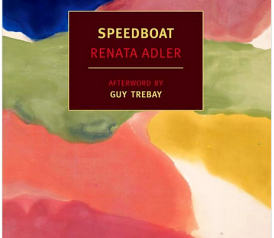
Speedboat by Renata Adler

The Submission by Amy Waldman

A Hundred Flowers by Gail Tsukiyama

One Thousand White Women: The Journals of May Dodd by Jim Fergus

State of Wonder by Ann Patchett

11/22/63 by Stephen King

Enchantments: A novel of Rasputin’s daughter and the Romanovs by Kathryn Harrison

Eleanor of Aquitaine: A Life by Alison Weir

The Lady in the Tower: The Fall of Anne Boleyn by Alison Weir

Dreams of Joy by Lisa See

Sweet Tooth by Ian McEwan

Open City by Teju Cole

The Island at the Center of the World by Russell Shorto

Where’d You Go, Bernadette? by Maria Semple

Let me know if you read anything that is absolutely un-put-down-able!

Frank O’Connor International Short Story Award–the Shortlist!

I want to read a collection of short stories with my Literary Masters book groups this coming season.  We are absolutely spoiled for choice!  Do we read something from Lydia Davis, the most recent International Man Booker Award winner?  Or perhaps we catch up on one of Alice Munro’s collections?  She, too, is an International Man Booker Award winner.  Or perhaps we’ll read the collection from the winner of the Frank O’Connor International Short Story Award.  The shortlist has been announced:

  • Tea at the Midland and other stories – David Constantine 
  • Siege 13 – Tamas Dobozy
  • Black Vodka – Deborah Levy
  • Black Dahlia & White Rose
  • We’re Flying – Peter Stamm
  • Battleborn – Claire Vaye Watkins

Congratulations to these authors!  The winner will be announced in early July.  For more info, click here.

Independent Foreign Fiction Prize–We’ve Got a Winner!

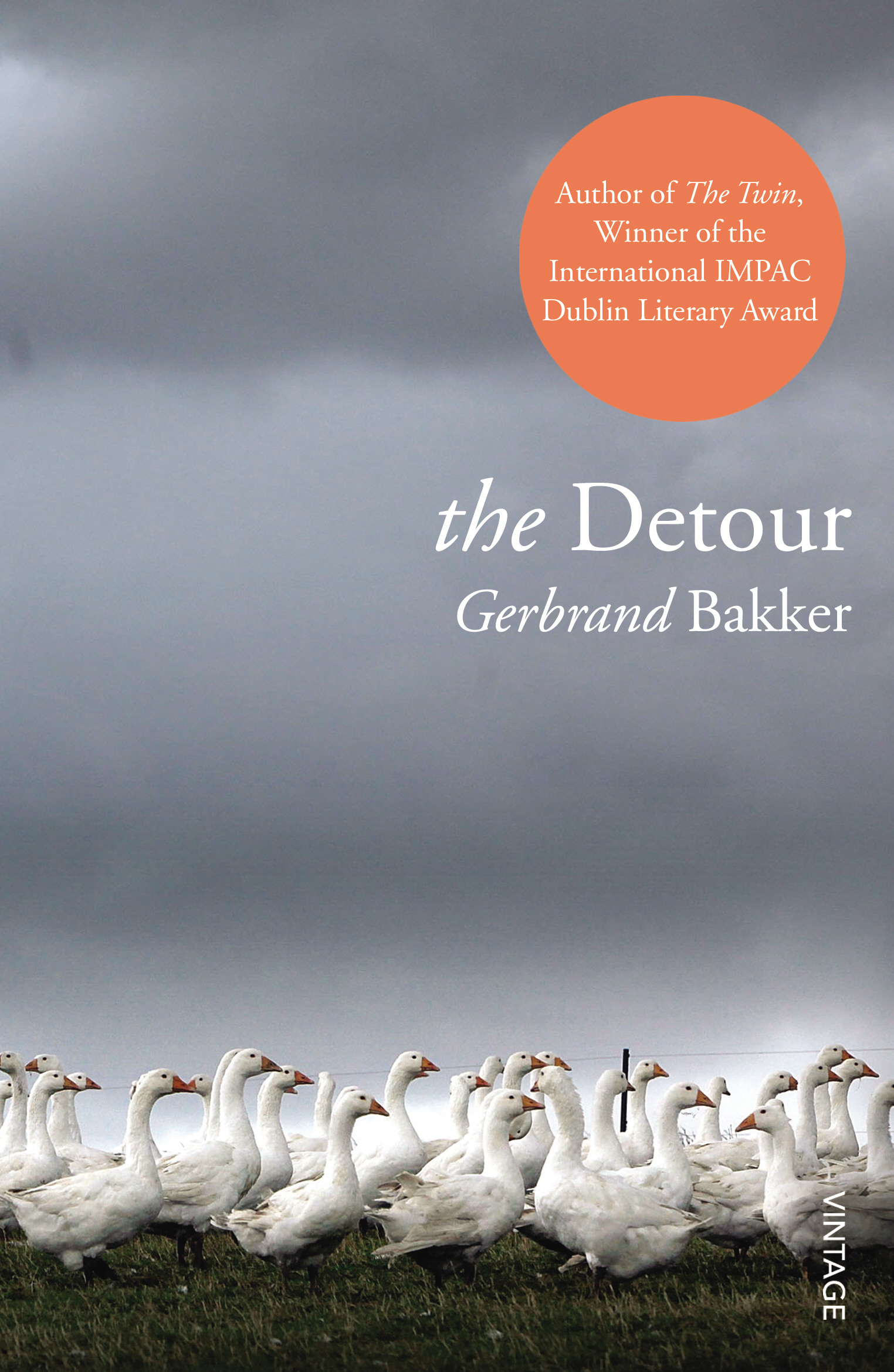
Congratulations to Dutch author Gerbrand Bakker for winning the Independent Foreign Fiction Prize for his novel The Detour.  Bakker has won prizes before; indeed, his novel The Twin is one of my favorites–you’ll remember how I gushed about it in an earlier blog post (click here) as a quiet book that just stayed with me for the longest time after I finished it.

I can’t wait to get my hands on The Detour–race you to the library!