Should Your Book Club Read A Visit from the Goon Squad by Jennifer Egan?

A rather controversial choice–some members loved it and some did not–A Visit from the Goon Squad by Jennifer Egan was Literary Masters’ selection for November, and the bottom line is: yes, this is an excellent choice for your book club, but you need to have a focused, disciplined discussion to get the most out of this very dense book.  This blog post should help you.

One reason this book is so dense is its structure, and you’ll want to explore that at some length.  In an interview, Egan says she wanted to structure the book like a record album, with an “A” side and a “B” side.  Explore this issue, and quite a bit comes up.  You may want to consider the ‘collection of chapters’ as a type of record album–with some ‘songs’ that you like more than others.  Also, consider how each chapter relates to music in its message, mood, and tone.

Some of the themes of the book are actually expressed through the structure, and this will be illuminated if you really ‘dig deep’ as we do in our LM literary salons.  For example, one theme we discussed was how we are all separate yet connected.  Egan wanted each chapter to be able to stand on its own, which each one does, but taken in the context of all the stories, each chapter takes on that much more resonance and meaning. 

One of the most interesting chapters is the one done as a power-point presentation.  Now, your book club will want to talk about what this entire book is saying about technology and its effect on us individually and as a society, but this chapter particularly brings up the idea of the pause and what that signifies.  Now think about all the chapters–what does the “pause” mean?  This brings up all sorts of different and wonderful interpretations!

I found one of the main themes of the book to be redemption.  Each of us has an “A” side that eventually, for a variety of reasons–and your book club will want to explore these reasons with regard to each character–stops.  But, after a pause of some sort, the music starts up again, and you’re on your “B” side.  Another allusion to the record album that will get your book club talking!

You’ll want to consider how this is a book about time.  And also about time and music.  Egan says that nothing can bring you back in time like hearing a song from your past.  How are the characters relating to/ considering their pasts?  Read the epigraph and discuss how it relates to the book.  Egan says that she was heavily influenced by Marcel Proust’s Remembrance of Things Past while writing A Visit from the Goon Squad, so your more literary book club members will want to weigh in here.

Consider the title!  and discuss!  What is the “goon”?  You should have more than one interpretation of this most interesting question!

Another theme you’ll want to explore is authenticity versus artifice.  Just how much “spin” is going on in each chapter?  Ha!  Another allusion to the record album–I love it!  Many of my members found this to be a depressing topic to delve into, especially as we considered the last chapter where technology is used to an extreme to manipulate everyone’s desires–and no one seems to be aware of it.  Just how much free will do we have?  How mediated are we in our daily lives? 

This novel is very much an exploration of identity–what it is, how we acquire it, why and how we refashion it.  You can spend an entire meeting discussing this one topic.

I’m just scratching the surface (no pun intended!) in this blog post as to what your book club can discuss when it comes to this highly entertaining and deeply literary book.  One thing you can do to really “dig deep” is take one or two stories and concentrate on them.  My favorite is “Safari, ” but each one is brilliant in its own right.  Happy reading!
WHIRL is on a Roll!

As you all know, WHIRL stands for What Have I Read Lately, and I must say, I have read some wonderful books lately.  Don’t you just love it when your reading is on a roll, so to speak?  So.what have I read lately?  Read on to find out:

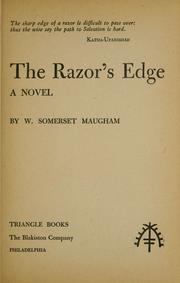
You know from my previous post that I loved The Painted Veil by W. Somerset Maugham.  I loved it so much, I went to the library and took out another novel by Maugham, The Razor’s Edge.  This was one of those books that you look forward to returning to when you’ve finished whatever else it is you must do.  Many of the same themes are present in this novel that are in The Painted Veil, and there’s much here to ponder, but, as we all know, it’s the story that matters most, and this story is compelling.

Isabel is in love with Larry and he’s in love with her.  However, Isabel wants the good life, the fun life, the high society bourgeois life.  And Larry is in search of something else.  Something else entirely.  So how to reconcile their differences and hold onto their love?  This is a large part of the story–but not all of it.  You’ll meet other wonderful characters, you’ll contemplate what “love” really is, you’ll ponder how one should live, and what makes a successful life.  This is a slow-paced page-turner, if that’s not too much of an oxymoron for you.

The Sense of an Ending by Julian Barnes.  Oh, we all know by now that this novella won the Booker Prize this year, and you probably have read many reviews on it.  I quite enjoyed it, but I have to say, and you won’t understand this until you’ve read it, I felt a little cheated when I was through.  Yes, it is worth reading.  Absolutely.  And YES, I get that my feeling was part of the point of the book.  But I just think that it came up just short of being a WOW of a book for me.  I can’t say why because that would give too much away.  So you’ll just have to read it and see what I mean.  Enjoy!

Obviously I liked Barnes’ writing because I went straight to the library and took out Arthur and George by the same author.  Now, this book I loved.  It is a bit on the slowish side, just a tad, but it is so good.  It is based on the true story of Sir Arthur Conan Doyle helping to clear the erroneous conviction of George Edalji, a half-Indian son of a vicar.  This is a fantastic book–it was short-listed for the Booker in 2005, and there is MUCH to ‘dig deep into’–I may just choose it one of these days for a Literary Masters Salon selection.

What about you?  What have you read lately?

Should Your Book Club Read The Painted Veil by W. Somerset Maugham?

Yes!  And if you’re not in a book club, poor soul that you are, you should still read this fabulous novel on your own.  It’s a beautiful, lyrical, thought-provoking book that I read in two days.  I would have finished it in one sitting, but I forced myself to slow down to enjoy the language and to think about the themes.  I loved this book.  I understand there’s a film out there based on the book, but I don’t think I’ll see it–I don’t want to ruin a good thing.

Warp-speed plot summary: 

Kitty, beautiful, spoiled Kitty has married fairly “well” in order not to be left on the shelf forever.  Walter, sweet, sincere, but achingly dull, has offered her a secure if not wildly passionate life in Hong Kong, where he is posted as a bacteriologist.  Once there, Kitty makes up for the lack of passion in her marriage through her adulterous affair with Charlie, the charming and handsome assistant colonial secretary, an appropriately glamorous post–much more exciting than being a bacteriologist.

However, in the opening scene–really one of the best opening scenes in literature, don’t you think?–Walter has found out about Kitty and her lover.  And, I won’t give more away, but Kitty ends up in the cholera-stricken area of China, where she is forced to deal with a life that doesn’t revolve around superficial beauty and charm–a life where Kitty will need to dig deep within herself to find resources that she may just not even have.

So, what can your book club discuss?

There are so many angles at which to approach this novel.  For one, it’s a love story.  You can discuss the different types of love in the novel and how they change.  That could take an entire evening!

There is spirituality and philosophy in the novel.  The characters have had to choose how they wish to live.  Which path is right?  Or is there a right path?  And how do we find that path? 

This novel is filled with deep questions.  What makes life worth living?  What is this novel saying about beauty?  What is it saying about morality?

The language of the novel is beautiful–I for one, am going to read more of W. Somerset Maugham–and you can dig into the imagery and symbolism.  What does the temple represent?  What does the title mean?  What does Walter’s enigmatic response to Kitty mean? 

You’ll of course want to discuss the characters and their relationships–all of them!

And you’ll want to ask yourselves–what is this book about?  What is it really about?  I think you’ll be amazed by the answers.

The more I think about it, the more I think I just may select this book for a future Literary Masters book group or salon!

Should Your Book Club Read Nemesis by Philip Roth?

Someone told me that when Nemesis came out, the reviewers said it wasn’t as deep and as layered as some of Roth’s other novels.  Huh?  I couldn’t disagree more.  Nemesis was Literary Master’s October selection, and we had some of the best discussions ever.  Nemesis has layer upon layer of meaning to dig into, and we did!

The bottom line: YES, your book club should read this novel.  And if you don’t belong to a book club, you should read it anyway.  It is, quite simply, one of the best novels I have ever read.  Philip Roth has aced it–this book is a page-turner, but it’s also extremely thought-provoking.

Warp-speed plot summary:  The setting is mainly a Jewish section of Newark, New Jersey, in 1944.  There is an outbreak of polio, and tension mounts as the townspeople become increasingly fearful for their children.  (It’s also wartime, and we all know, looking back, what was happening to Jews at the time.) Bucky Cantor is the director of the playground, and he feels it’s his duty to keep the kids safe and healthy.  However, Bucky’s girlfriend, Marcia, is a counselor at a summer camp in the cool mountains, an idyllic place where polio isn’t even a concern.  A job arises for Bucky there, and he has to choose between staying where he is or joining Marcia.  Sounds simple, but this story is complex in a very sophisticated way.

So, what can your book club talk about?

For a start, consider the title.  Can we understand this novel better in the context of a Greek tragedy–where the hero has a flaw, usually hubris, and so the spirit Nemesis puts the hero in his place?  If so, what is our hero’s hubris?  How does it manifest itself?  Or, if you just want to think of a nemesis as an enemy, what is the nemesis in our story?  Is there more than one?

Consider the protagonist Bucky.  What is motivating him?  Why does he make the decisions that he does regarding Marcia?  Why does he make the decision about the summer camp?

This book is a deeply philosophical novel, asking the BIG questions about how one should live.  And of course, asking about whether God exists.  Consider the characters and how they view how one should live.  Take the narrator, for instance.  And compare him to Bucky.  What sets them apart from each other?  Is the book making a judgment about how to live one’s life?  Is the book making a judgment about whether God exists?  What is this book saying about chance?

This book is also a deeply psychological novel, delving into what makes us, as humans, tick.  Do you think Bucky’s actions can be explained when one considers that he feels guilty for his mother’s death?  A type of survivor’s guilt?  What about the fear that grips the townspeople?  Could they have acted any other way?

This book can also, one can argue, be read on a political level.  What else at the time was threatening Jews, attacking them out of nowhere, herding them into a place apart from others?  Is it significant that the boys who come in and spit on the playground are Italian?  Who or what does Horace represent?  Is that handshake to appease him and get him to leave the playground significant?  What references to Germany are present at the Indian Night ceremony?  Or, can we look at the incidents at the summer camp in the context of Native American history?

This book is also exploring the concept of story-telling, asking why we tell them, and taking a close look at just what underpins our beliefs.  Again, consider the ritualistic ceremony at Indian Night.  What’s the significance of that, do you think?

This book is filled with mythological and biblical references.  Consider the scene where Bucky is talking to Dr. Steinberg in Mrs. Steinberg’s garden.  Dr. Steinberg represents?  And consider the peach that Bucky bites into.  And consider Bucky’s subsequent actions…

Or perhaps, like me, you think Bucky is extremely narcissistic.  And if you remember the myth of Narcissus, you’ll see a deeper meaning in the scene where Bucky is diving into the water…

This book is filled with symbolism that you can ‘dig deep’ into.  For example, what do the butterflies represent, if anything?  And what about the relentless sun?  Philip Roth was reading Camus’ The Plague while writing Nemesis (or so I read), and Camus is also the author of The Stranger.  Remember the relentless sun in The Stranger?  Significant?  Coincidental?

What do you make of Bucky’s bad eyesight?  Symbolic?

I laughed as I realized that we all were acting out a major theme of the book as we looked for meanings in the book.  Did Roth intentionally put in the book all that we saw?  Or was it just us bringing our own readings to it?  Does life have a grand design?  Or do we choose to read our own meanings into random occurrences? 

I could go on, but that’s enough to get your book club talking.  I cannot recommend this book enough–you will NOT be disappointed!

Lots of Literary News!

So, you know that I love prize-winners, and there’s lots of buzz surrounding this subject right now.  One is that the finalists for the National Book Award have been announced.  You can access all the info you need here:

http://www.nationalbook.org/

Of the fiction finalists, I have only read The Tiger’s Wife, reviewed here.  I have already requested two of other the titles from the library; I have to admit, I like the sound of The Buddha in the Attic.  I mean literally–I like the way that title sounds.

The other buzz is about the new literary prize coming out of the UK and, if you believe all the rumors surrounding it, competing with the Man Booker Prize!  The audacity!  It’s called The Literature Prize.  There’s a certain self-importance linked to that simple name, don’t you think?  Here’s a link that you may enjoy if you’d like to follow this story:

http://www.thebookseller.com/news/new-literature-prize-establish-standard-excellence.html

Evidently this is good news for Americans because they won’t be excluded from this opportunity as they are from the Booker due to estrangement from the Queen. 

More literary news to come soon, so check back often!

Women WHIRLing!

So, I promised to compile of list of books that Literary Masters Book Groups and Salons members devoured over the summer.  In no order whatsoever, and with very little accompanying commentary, here are some of the more popular titles (numerous members read these) that you may want to check out:

Submisson by Amy Waldman; here’s a link to the NY Times review of it:
http://www.nytimes.com/2011/08/16/books/the-submission-by-amy-waldman-review.html

The Invisible Bridge by Julie Orringer; here’s a link to The Washington Times review of it:
http://www.washingtontimes.com/news/2010/dec/31/book-review-the-invisible-bridge/

In the Garden of Beasts by Erik Larson (non-fiction); here’s a link to the NY Times review of it:
http://www.nytimes.com/2011/05/20/books/in-the-garden-of-beasts-by-erik-larson-review.html?pagewanted=all

The Paris Wife by Paula McLain; NY Times review here:
http://www.nytimes.com/2011/03/20/books/review/book-review-the-paris-wife-by-paula-mclain.html

The Warmth of Other Suns by Isabel Wilkerson (non-fiction); here’s a link to the WSJ’s review of it:
http://online.wsj.com/article/SB10001424052748703467004575463852823978496.html

Unbroken by Laura Hillenbrand (non-fiction); here’s the NY Times link:
http://www.nytimes.com/2010/11/21/books/review/Margolick-t.html?pagewanted=all

The Hare with the Amber Eyes by Edmund de Waal (memoir); here’s a review from the Washington Post:
http://www.washingtonpost.com/wp-dyn/content/article/2010/09/01/AR2010090105971.html

Just in case you’re looking for something to read~enjoy!

Should Your Book Club Read The Road by Cormac McCarthy?

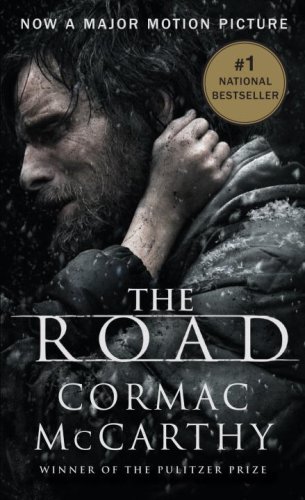
Although I found The Road by Cormac McCarthy absolutely stunning, I hesitate to recommend it for book clubs.  I highly, highly recommend it for individuals, and I would even like to discuss it with someone else who has read it, but paradoxically, I cannot suggest you select it for your reading group because…

Well, I’m not sure exactly why.  After all, Oprah selected it for her book club, and who am I to argue with Oprah?  Let’s just say that I think there are other novels better suited for book group reading, others that I would suggest instead of this one.  I am currently reading another novel by Cormac McCarthy, All the Pretty Horses, so I’ll let you know if you should choose that one for your group.  Let me finish it and I’ll get back to you.

The Road is a quick read, but one that lingers long after you finish it.  It’s the story of a man and his son who are traveling down a road in what seems to be a post-apocalyptic America.  We don’t know what has caused the destruction, but the devastation is so intense and so pervasive, every moment for the duo is a struggle to survive, and every additional day of survival is a questionable achievement in itself.  After all, to live like this, wouldn’t the alternative be better?

Two things pulled me along through the novel (in fact, I couldn’t put the book down): one was McCarthy’s poetic prose.  For a long time I had avoided him because I thought he was too grim and violent, but I am so glad that I overcame my squeamishness.  His writing should not be missed.  (Has anyone ever compared him to Hemingway?)

The relationship between the son and his father was the other thing that captivated me.  Whatever monumentally destructive event occurred, it took place before the boy was born, so his entire world has been constructed by his father.  (The mother has, well, you’ll have to read the book to find out.)  The two are searching for other “good guys” but apparently the bad guys, and they are really bad, are more numerous.  Can you imagine living in a world where every single movement of every single day has the stress of life or death importance upon it?  McCarthy helps you imagine it, and for me, just doing that–imagining living that way–was a seriously intense reading experience.

Yes, this novel is bleak, but it’s also filled with hope.  It’s grim, but it’s also filled with beauty.  Yes, it shows the absolute worst of mankind–no doubt.  But there is something to counter that, and I’ll let you find out for yourself what it is.  This is one of the best books I’ve read this year, and I know that I am accused of liking dark literature, but I feel confident recommending this book to anyone–it’s just that good.

Should Your Book Club Read Amaryllis in Blueberry by Christina Meldrum?

Should your book club read Amaryllis in Blueberry by Christina Meldrum?  A resounding “yes!” is the answer.  This intriguing novel is the ideal choice for a book club; it’s a compelling read, the writing is beautiful, and there is a lot to discuss.  In fact, the publisher, Simon & Schuster, realizing the appeal Amaryllis in Blueberry would have for book clubs, produced a paperback in order to make it more affordable, and completely skipped the hardcover stage.

You may not know Meldrum’s work because her first novel, Madapple, was pegged for the YA (young adult) market, where it received immediate and widespread critical and commercial success, landing as a finalist on more than one prize shortlist.  (And you know how I like literary prizes!)  Amaryllis in Blueberry is her first “grown up” novel, although I think this is a “crossover” book, one that would appeal to the “young adult” market as well as to the “adult” market.  Hmm..not sure that’s what we’re called, but you know what I mean, right?

Quick synopsis:

Dick and Seena Slepy are married, but we get the feeling that their marriage has become a sort of prison for them.  Each is unhappy in his/her own way, and we soon learn that each has a secret that is feeding this unhappiness.  Dick decides that the only way to escape his miserable situation is to go to Africa as a medical missionary, and he drags his family–his wife and four daughters–along.

The oldest three girls each have the first name of Mary, but are called by their middle names, and each one harbors a corrosive secret of her own.  The youngest daughter, Amaryllis, is called Yllis, and early in the book, Amaryllis seemingly discovers yet another family secret and opens it up to the family, unleashing an unforeseen chain of events that will change each and every one of them.

So, what can your book club discuss?

There are lots of secrets in this book, and much to discover.  Meldrum weaves mythological stories into the plot of the book, and does it so well and so seemingly effortlessly that the reader ends up learning not only about the Slepy family, but also about age-old stories, and why we tell them.  The book explores all sorts of stories, from religion to science to family legends to stories we tell ourselves to get through the day, and your book club will want to discuss the how and why of these tales.

Another theme running through the novel is truth or Truth–what it is, whether it exists, how we reach it, and how we hold onto it.  This is quite a philosophical novel, but done in an understated way, through the very compelling main story.  A philosophical page-turner, if you will.

Meldrum is a beautiful writer, and some of her prose reads almost like poetry.  Your book club will have a blast with the imagery–note the literary nod to Conrad with the light/dark imagery, and have fun deciphering the symbolism in the story–do the characters represent someone or something other than themselves?  What does Africa represent?  Can we do a Freudian reading of this novel?  Pay attention to the names and how they give meaning to the tale. 

In the end, this novel seems to be about redemption, about hope, about having a second chance.  As the Slepy family returns to America, forever changed by their stay in Africa, they seemed poised to take on a life without secrets.  Or do they?  Which secrets remain?  This is something your book club will want to discuss!

Bottom line:  yes, your book club should read Amaryllis in Blueberry–it’s a perfect choice–and I am looking forward to more writing from this incredibly talented author!