Orange Prize Short List Announced!

Oh dear.  The short list for the Orange Prize has been announced, and I didn’t like three out of the six novels on the list.  You’ll recall that my Literary Masters book groups read last year’s winner, The Lacuna by Barbara Kingsolver.  That was a wonderfully literary novel, which I blogged about here.

This year’s short list is as follows:

The Tiger’s Wife by Tea Obreht.  Here we go.  I can just see this book sweeping the literary awards, and as you know, it left me…underwhelmed.  I blogged on it here.

Great House by Nicole Krauss.  Ugh.  I blogged about it here.

Room by Emma Donaghue.  I know that I said I wouldn’t read this book, but I did.  And I found it creepily compelling for the first half, and then I thought it fell apart in the second half.  Yes, I, like others, found the boy’s voice believable and, as I said, compelling, but that wasn’t enough to sustain me.

Grace Williams Says It Loud by Emma Henderson.  I haven’t read it, but it takes place in an institution for the mentally ill, and is about a relationship between the two patients.

The Memory of Love by Aminatta Forna.  I haven’t read this either, but it’s evidently about the Sierra Leonean civil war.  Or the aftermath.  Or both.  I’m sure I’d learn a lot anyway.  I think I may read this one.

Annabel by Kathleen Winter is about a hermaphrodite whose parents’ choice of surgery has massive consequences in the child’s life.  I may read this one as well.

One book that did not make the list that I have on my TBR shelf is Jennifer Egan’s A Visit from the Goon Squad.

For more on the Orange Prize and its short list, click here.  And let me know what you think–which novel do you feel should win?

I Haven’t WHIRLed in Ages!

As you know, WHIRL stands for What Have I Read Lately.  Recently I asked my Jane Austen Literary Salon what books (besides Jane’s six novels that we are reading and discussing in the salon) they have enjoyed lately or what books are on their all-time faves list.  Here’s what they said:

Moby Dick by Herman Melville, “because the entire universe is contained in it, and it’s still so compelling today.”

Wow, makes me want to re-read that wonderful novel!  The last time I read it was with the fabulous Professor Zimmerman in my 19th Century American Lit class.

The Poisonwood Bible by Barbara Kingsolver, “an amazing piece of literature.”

Yep, one of my favorites, too.  I am a big fan of Kingsolver; as you know, one of my Literary Masters book selections this season was The Lacuna, another winner.


Never Let Me Go by Kazuo Ishiguro, a “creepy page-turner with amazing insight into people’s psyches as well as very well written social interactions.”

Hmm…makes me want to pick this up again.  I started it awhile ago, and found it too…yes, creepy!…to continue.  Perhaps I’ll give it another try.

Austenland by Shannon Hale–“I listened to the book on tape on a car trip and have not laughed so much in a long, long time.”

Well, I hope you weren’t the one driving!  I tend to close my eyes when I’m laughing that hard.


The Particular Sadness of Lemon Cake by Aimee Bender.  “I have not read this, but am fascinated by the concept of tasting the emotions of the cooks who prepared the foods eaten.”

Hmm…I’m not sure it counts if you haven’t read the book you’re recommending!  The same concept was explored in Chocolat, no?


 The Thousand Autumns of Jacob de Zoet by David Mitchell and The Brief and Wondrous Life of Oscar Wao by Junot Diaz “are wonderful books.  Both are historical fiction, although Oscar Wao is much more recent.”

Two fantastic books, I do agree!  Literary Masters book groups read The Brief and Wondrous Life of Oscar Wao last season, and everyone loved it, and we are reading The Thousand Autumns of Jacob de Zoet right now!

“The Bone People by Keri Hulme for fiction.  Traveling with Pomegranates by Sue Monk Kidd and Ann Taylor Kidd for non-fiction.”


I haven’t read either of these books, but I like the title of the non-fiction book.

“The best recent piece of fiction is The Elegance of the Hedgehog by Muriel Barbery.  I like her as well as Jane which is saying a lot.  She’s also written Gourmet Rhapsody which is not as good but still very good indeed.

Very interesting…I have heard mixed reviews of The Elegance of the Hedgehog.

“There are three non-fiction books by Michael Lewis that I have read this year and that I am wild about.  My favorite I guess is The Big Short, which is the most intelligible and readable account of what caused the current financial crisis.  The other two are Moneyball and The Blind Side, which are about sports but there’s a whole lot about people and prejudice and analytical thinking.” 

I just took The Big Short out of the library; I can’t wait to read it!


Hey, there’s more to WHIRL about, but that’s all for now.  Stay tuned for my next WHIRL post.  And don’t forget to tell me what you’ve been reading lately!

Orange Prize for Fiction Long List Announced!

The season of literary awards is off to a brilliant start!  The Orange Prize for Fiction–in its 16th year of celebrating women writers–has announced its long list.  On it you’ll find twenty wonderful books to keep you turning pages until the short list is announced on April 12th.  I can’t wait to see that list!

The winner will be announced on June 8th.  Last year’s winner was Barbara Kingsolver for The Lacuna, and as you know, Literary Masters book groups and literary salons kicked off our season with that excellent novel.  Let’s see if this year’s winner lands on Literary Masters’ list for the 2011/2012 season.

To see the long list and for more on the Orange Prize, click here.

Should Your Book Club Read The Glass Room by Simon Mawer?

This is an easy one.  The answer is absolutely yes.  Not only did everyone love this book, it made for a lively discussion in all my Literary Masters book groups.

The Glass Room was short-listed for the Man Booker last year, but defeated by The Finkler Question.  Go figure.  I had never read anything by Simon Mawer, but now I’m looking forward to picking up The Fall, recommended by one of my Literary Masters members.

Quick plot summary:  It’s the late 1920’s in Czechoslovakia.  Victor and Leisl Landauer want to build a house that embodies the future and that has nothing to do with the past.  They hire an architect who doesn’t build walls and ceilings–instead he captures space and light.  Blazing the trail of what will come to be known as the modernist movement in architecture, he builds the Landauer couple a glass house, the main feature of which is the glass room, a sanctuary of calm, reason, and scientific rationality.

The thing is, a lot goes on inside this sanctuary, not all of it calm, reasonable or rational at all.

The book takes us through about 7 decades, and during that time we watch as various characters–with various agendas–enter and leave the glass room.  Do they transform it?  Does it transform them?  That was something we discussed at length in our meetings.

Simon Mawer is a wonderful writer, so it’s easy to speed through this book; I found it to be a compelling page-turner.  But there’s a lot there to think about and reflect upon, so it’s worth slowing down and savoring this novel.  The characters are intriguing, to say the least, and we talked about them in depth–their motivations, their desires, their self-delusions.  How they tried to escape their histories–as well as their present places in time–but to no avail.  And we talked about them as metaphors for what was going on at that time in the world.

Besides the characters, some of the things your book club may want to discuss:  What the glass room represents.  We started off each meeting with this question, and you’d be amazed at the various answers!  I always find it fascinating that we can read the same words and interpret them differently.  Don’t forget to discuss the onyx wall!

You can all think about what this book is saying about history.  The structure of the book, with its many parallels and echoes, adds much to this conversation.

This novel explores big ideas, and your book club may want to do the same.  Science versus God, Nature versus Nurture, Science versus Art, Fate/destiny versus Randomness/chaos, Darwinism, Existentialism–they are all in there in some way, and you can have fun ‘digging deep’ into this literary treasure.  (I am only touching on some of the themes in the book here–I’m telling you, it is chock full!)

The Glass Room is not a perfect book, but it has so many wonderful qualities, a reader can easily put up with the two annoying aspects of it (as mentioned by reader after reader)–the ending, and the continual coincidences that pepper the story and strain credibility.  I happened to find neither annoying, and I think the coincidences underscore one of the main themes of the book, that is fate/destiny versus randomness/chaos.

I feel very comfortable highly recommending this book for an individual reader as well as for book groups.  I cannot believe that The Finkler Question won the Man Booker over The Glass Room, but that’s a discussion and a blog post for another day!  Please let me know if your book club reads The Glass Room–and what you all think of it.

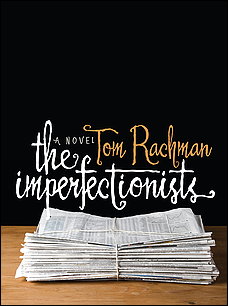
The Imperfectionists by Tom Rachman


If you just want a quick “bottom line,” here it is: read this book. It is so good. Let me warn you, however–it is not a novel in the traditional sense, but rather a series of vignettes taking place in or about the same Rome-based English language newspaper (think International Herald Tribune) at different times, with some characters from each chapter popping up as bit players or as the main attraction of other chapters.

This bothered me at first because I thought I was reading a traditional novel, but also, and more to the point, the writing captured me immediately, and I was so drawn into the first story that I wanted more. Once I realized the structure of the book, however, I went with it and just loved it.

So, rather than review each plot or character, let me say that Tom Rachman can write. The characters, the plots, the themes, the descriptions, the metaphors, everything is a pleasure. Loosely, the time period covers from 1953, when wealthy businessman Cyrus Ott decides to found an international newspaper in Rome, and progresses through to 2007, with Ott’s grandson Oliver at the helm.

The structure of alternating chapters charts the ravages of time and progress on the paper itself, followed by a chapter that illuminates the (sometimes ravaged) lives of those who work for it. Rachman is so good at drawing his characters that you feel you know them in the short time you’re with them, and you also get a feel for what it’s like to be a journalist. Yikes!

Along with the superb characters and their stories is the setting of Rome, a place where I have been but I don’t know well. Rachman knows it well and seems to love it; I was reminded of Ian McEwan’s treatment of London in Saturday. The Imperfectionists made me want to go to Rome!

I highly recommend this book. It’s compelling, it’s clever, it’s original, and it’s a darn-tooting good read. Is it a good choice for a book club? Well, I think it could be tricky because of its structure, but if you have a group that really concentrates and will sit and draw connections between all the vignettes, then it could work. If you have a chatty club that doesn’t focus well or have structured discussions, then I’d suggest you choose a more traditional novel.

Tell me what you think about The Imperfectionists. And Tom Rachman, if you’re reading this, please write another book soon!

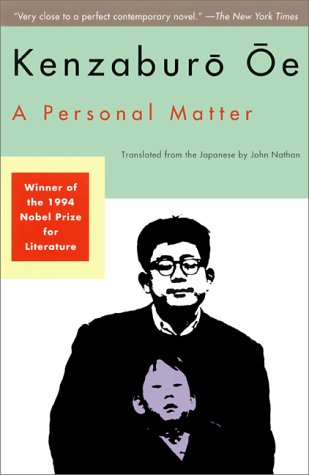
A Personal Matter by Kenzaburo Oe


Kenzaburo Oe won the Nobel Prize for Literature in 1994, but I hadn’t read any of his books until this one. My brother–the one who never goes to the library because he doesn’t like used books–is really into Japanese literature. He gave me a stack of novels last week by various authors, and I chose this one because it was short–only 165 pages.

But those pages really do pack a wallop.

This book is not for everyone. And I don’t think I could choose it for my Literary Masters book groups. Although it’s very literary and there is much to think about, explore, and appreciate, the subject matter is quite painful. The protagonist Bird’s son has just been born with a grotesque deformity protruding from his head. We follow Bird as he reacts to and tries to escape from this shocking reality, and much of the book is very bleak, bordering on kind of sick in some parts.

Yet it’s really good. I found myself looking forward to getting back to it, I think because, along with all the depravity, there is also deep psychological understanding and human compassion in the story. Although Oe taps into our deepest fears, he also illuminates the resilience and courage that we are capable of.

For those who can handle the subject matter and who don’t mind reading something that isn’t, well, pleasant, I highly recommend this book. If you read it, let me know what you think. I am looking forward to my next novel by Kenzaburo Oe. I should go look at that stack of books my brother gave me…

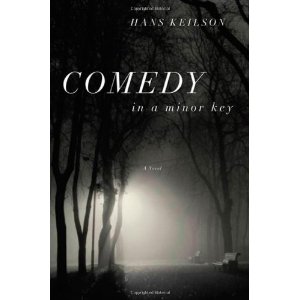
Comedy in a Minor Key by Hans Keilson


Written in 1947 by Hans Keilson, this German novella, translated brilliantly by Damion Searls, is a quick little read that will stick with you for quite some time. The story is simple: Wim and Marie, a Dutch couple, take the decision to hide a Jew called Nico in their home. Although the trio is faced with an extraordinary situation, they endeavor to keep life as ordinary as possible.

Until Nico unexpectedly dies.

I didn’t give anything away there; you find out about his death in the first few pages. But Wim and Marie must now deal with his body, and therein lies the ‘comedy’ mentioned in the title. I must warn you, though: you’ll only laugh if you find the cosmic sense of humor funny.

There’s a lot in this novel for a book club to discuss, but most of it will be quite heavy. If your group is up for an existential journey, then it could be a good choice. If not, I still highly recommend this book for any individual reader–it really makes you stop and think about life and its meanings, or lack thereof. For a more in-depth and wonderful review by Francine Prose of this and Keilson’s other work, The Death of the Adversary, click here: http://www.nytimes.com/2010/08/08/books/review/Prose-t.html


Literary Masters has a Facebook page. I say this with mixed feelings. I hate it when people of my generation (not that old, just not that young either, never mind the specifics) act disdainful toward the current craze of social networking and all that entails, you know, Facebook, Twitter and the like. Instant info, constant sharing, keeping it short, what’s the buzz now. I’m not against any of it, I just wonder about the value of it all. And I wonder, where is it taking us?

I mean, after all, I run book groups and literary salons. We’re kind of the antithesis of what I’ve just described. We take time to read books. We take time to think about what we’ve read. We take time to ‘dig deep’ into what we’ve read and we take time to discuss what we’ve read.

And I think every single person in every one of my groups would tell you that there is tremendous value in what we do. Not only do we connect with each other every month, we connect with readers across time, we reflect on what it means to be on this earth, and we contemplate how we want to live.

Hmm…that was a bit heavy.

Having said all that, I agree with Tracy from the musical Hairspray, who sings, “You can’t stop an avalanche when it’s racing down the hill,” and so I am, better late than never, going to embrace my new Facebook page. I’m not sure where it’s leading me, but I’m curious. So, I plan to update it frequently. Go there today and you’ll find a last minute gift suggestion–one of the funniest books I’ve read all year.

So please visit Literary Masters on Facebook. And let me know if you “like” it!

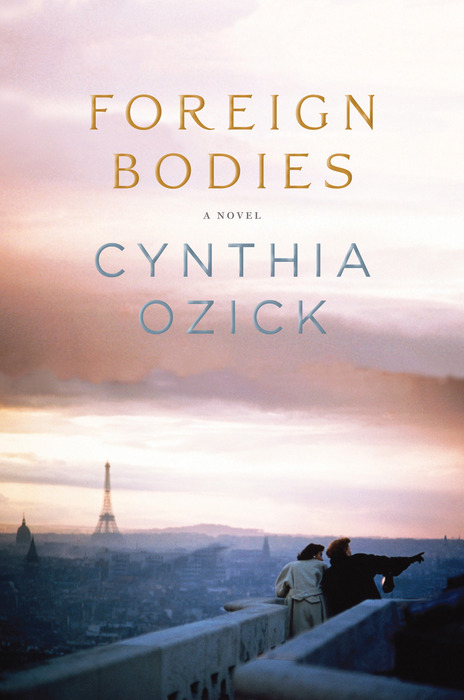
Foreign Bodies by Cynthia Ozick

This was my first introduction to Cynthia Ozick. I read two reviews of Foreign Bodies; both said it was a clever re-working of Henry James’ The Ambassadors, and both assured me that one could read, understand, and enjoy the former without having read the latter.

So, I read and enjoyed Foreign Bodies in a couple of days. Did I understand it? Hmm…I think so. Although I must admit, I feel like I’m missing… something.

Quick plot summary: It’s 1952 and Marvin Nachtigall has asked his sister Bea to interrupt her European vacation in order to locate Marvin’s wayward son Julian and make him return to his studies in America and the life Marvin feels he should lead.

Bea does as she is asked, sort of. Resenting her horrid brother’s presumptive attitude (and he really is horrid), she does locate Julian, now living in Paris with his older and traumatized wife, a Romanian refugee, but she makes little effort to repatriate him. Instead, she takes matters into her own hands.

Bea, who has been virtually absent from her brother’s adult life and the lives of his children, now interacts not only with Julian, but also with Julian’s narcissistic sister Iris and their mother Margaret, who has been shunted off for a stay at an asylum. (Evidently she can’t take the strain of missing her son for so long, but the reader understands that she must really want to escape her horrid husband.) Bea also interacts, not only through memories but also in reality, with her former husband, Leo, another semi-horrid person.

Interacting is big for Bea, because she hasn’t done much of it (that the reader can see) up until now. A life passing one by, or living the life that others have chosen for you, or being an observer of the lives of others–are all themes running through this novel, and Bea falls into all three categories. Until now. Now Bea asserts herself, and the consequences are…startling.

I liked this book, or I should say I liked Ozick’s writing. It’s sparkling. And inventive. And captivating. It kind of dazzles. However, I can’t help feeling that I came away from the book with an appreciation of the surface of the story, but not the depths. As horrid as many of the characters were, I wanted to know more about them, and maybe in not such a clever way as Ozick delivers them.

Somehow I feel (and I could be wrong) that if I read The Ambassadors, I just might gain greater access to Foreign Bodies. Or perhaps I should have the members of my Literary Masters book groups read it, and together we can “dig deep” into it and see just what kind of literary gem we have unearthed.

What about you? Have you read Foreign Bodies? What do you think about it?

Man Booker Short List Announced


Six novels have made the short list cut for the prestigious Man Booker Award. Here’s the link if you would like to know more:

www.themanbookerprize.com/news/stories/1451

I am bummed that The Thousand Autumns of Jacob de Zoet, our :Literary Masters book groups choice for May, didn’t make the list. I do have one of the short listed books sitting on my ‘To Be Read’ shelf: Parrot and Olivier in America by Peter Carey. He’s already won the prize twice, so there’s a lot of hoopla about whether he can pull a hat trick. I’m not a big fan of his, which is one of the reasons I haven’t yet read this latest one. Perhaps I’ll give it a go soon.

Room, which I blogged about a couple of posts below (but you knew that, right?) made the cut and is apparently one of the favorites. I still don’t want to read it.

The Long Song by Andrea Levy made the list. Now I read this book recently and really enjoyed it. It’s a story told by a Jamaican slave and her voice is humorous, touching, and incredibly unique. I’ve been thinking about using this book for the month of February’s Literary Masters book groups. Hmmm…

The winner of the prize will be announced October 12th. Until then, we can all hold our breath. How about you? Have you read any of the books on the short list?