I’ll Read These Books ‘Cuz the Movies Were Great!


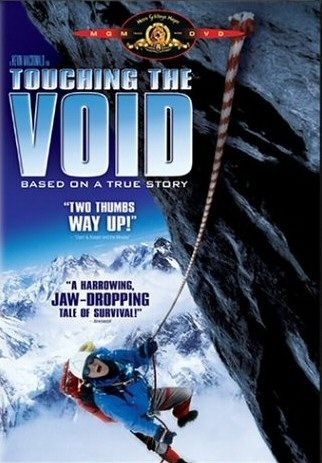
Okay, I think I’m a tad behind everyone else here, but I recently watched two films that blew me away, and now I want to read the books they were based on. The first film, Touching the Void, was so good, I did something I never do–I watched the special features about how the movie was made. And I loved that part, too!

Quick plot summary: It’s 1985 and two climbing partners, both from England, head out to the Peruvian Andes to climb the 20,813 foot Siula Grande. As yet, no one has been able to do this, but that doesn’t stop Simon and Joe.

The film alternates between Simon and Joe facing the camera, telling their story, and movie actors reenacting the expedition. It sounds sort of cheesy, but it works–I got so sucked in, even though I knew I was watching actors, my heart was racing as I worried for them!

I’m not giving anything away–you must know that the climb goes wrong, because there wouldn’t be a film about it otherwise, right? So, anyway, the two climbers make it to the summit. It’s quite dramatic along the way, and we cheer for them at the top. However–did you know that 80% of mountain accidents happen on the descent? I didn’t know that, but Simon and Joe do–and they realize that their job is not even close to being over.

So, down they climb.

And things are going quite well. Until Joe breaks his leg–badly. At this point, Simon could ditch Joe, but he doesn’t; instead he engineers some sort of knot and pulley system that will allow him to lower the two of them down the mountain. A brief side note here: never, ever underestimate the importance of knowing how to tie knots. I wish I had been a boy scout. Or a sailor. (I was a girl scout for a short while, and I did earn a cooking badge. No jokes, those of you who have experienced my cuisine.)

Back to the story: things are going quite well. Simon lowers Joe down via the rope, waits for his signal–a tug from Joe–and then Simon can rework the pulley system and lower himself. The system is working until, all of a sudden, things go disastrously wrong.

Joe goes flying over a precipice and is literally dangling in mid-air.

Simon, waiting well up the mountain for his signal, has no idea why Joe is not tugging. As he begins to fear the worst, Simon waits and waits. He is seated precariously on a slope, holding onto the rope, and he sees a storm blowing in. Eventually it is clear: either Simon has to cut the rope, sending Joe to a certain death, or he–Simon–will be pulled off his perch and the two of them will die.

Well, what would you do?

Simon cuts the rope, Joe plunges, and then the story really gets good. Because Joe doesn’t die. And what he goes through, what he survives, what he does in his situation, is beyond astonishing. From a psychological viewpoint, I found it fascinating to listen to him speak about being so close to death–almost going through it as it were–and then finding life on the other side.

What or who do you turn to when faced with almost certain death? God? Your wits? Fate? And can there ever be something good to come out of such a harrowing experience? These and other questions are answered by Joe, but I wonder, how different would the answers be coming from someone else? How different would my own answers be? I don’t want to know!

What Simon goes through is a whole other story. I’m telling you–if the book is even half as good as the film, it would be fantastic for a book group!
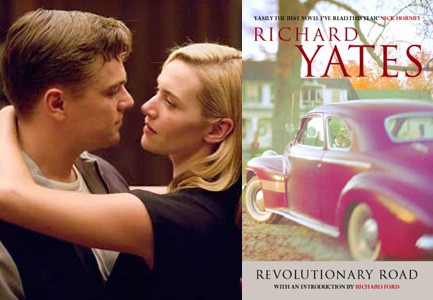
Okay, moving on: the next film is Revolutionary Road. First of all, can I ask, is there anything that Kate Winslet cannot do? She is extraordinary! I was reading a lot and not going to the movies the year she was nominated for two Oscars, one for The Reader and one for Revolutionary Road. It took me awhile to rent the dvd’s and I must say, I really disliked The Reader.

However, I loved Revolutionary Road. Quick plot summary (really, this time I will be quick): a married couple in the 1950’s thinks they are special. They have an idea of an ideal life, one that doesn’t contain middle-management jobs, mortgages, and children. In other words, one that isn’t exactly like the life they are living.

So they decide to throw it all in and move to Paris. The passion that Kate Winslet’s character displays drives them, but will it be able to surmount all the obstacles, both societal and personal, that are thrown in their way?

Again, from a psychological viewpoint, this portrait of a 1950’s marriage is riveting, and its insight into human nature and human needs grabs one by the throat with its bold truth.

I loved this movie, and cannot wait to get my hands on the book. What about YOU? Have you read either of these books? Are they as good as the films?
Two Books I Probably Won’t Read

I’m suffering from insomnia at the moment, so I just finished reading a couple of good articles online. One is in the NY Times and suggests that the growth in popularity of e-books is going to be for bookstores what the meteorite was for the dinosaurs. It got me thinking…without bookstores, readers won’t be able to browse around the store’s shelves to find books. They will rely more heavily on the reviews of professional readers, such as…hmm, let me see, oh, hello! Can I be of assistance?

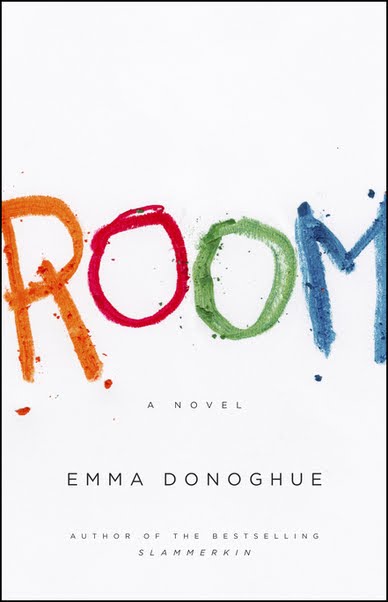
The other article was in the Guardian. It discussed the novel Room by Emma Donoghue, which has been long-listed for the Man Booker prize. Evidently the book is about a five year old boy and his mother who are held captive in a room–for years. There is a man who comes in the dark to bring necessities–and to take his own–but that’s the only contact, save for the television, that the mother and son have with the outside world.

I read about this book when the long list was announced, and thought yuck, I don’t want to read that. However, this article:

http://www.guardian.co.uk/lifeandstyle/2010/aug/13/emma-donoghue-room-josef-fritzl

makes it sound very interesting and rather worthwhile. Donoghue certainly is articulate when discussing her novel. She defends herself from the accusation that she is sensationalizing and exploiting the true-life horror story of Franz Fritzl, the Austrian who kept his daughter in a room for decades and fathered seven children by her. You’ve heard about him, right?

This book may have been “triggered” (Donoghue’s word) by that incident, but it is not about that. The author discusses how it is about the parent/ child relationship and the love that can withstand, and transcend, the ordinary–and the strange. She says, “Really, everything in Room is just a defamiliarisation of ordinary parenthood…The idea was to focus on the primal drama of parenthood: the way from moment to moment you swing from comforter to tormentor, just as kids simultaneously light up our lives and drive us nuts. I was trying to capture that strange, bipolar quality of parenthood. For all that being a parent is normal statistically, it’s not normal psychologically. It produces some of the most extreme emotions you’ll ever have.” She goes on to say ” I wanted to focus on how a woman could create normal love in a box.”

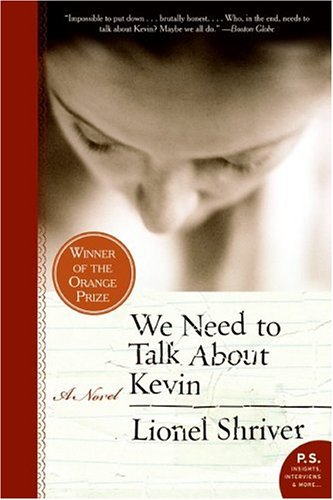
The author of the Guardian article, Sarah Crown, goes on to contrast Room with another novel that won the Orange Prize and that was “sparked” (Crown’s word) by another real life tragedy–the Columbine shootings–We Need to Talk About Kevin by Lionel Shriver. Crown points out that in Shriver’s novel “a mother and her son create hell in the heart of a middle-class idyll,” while in Room, “Ma and Jack conjure humdrum beauty out of a kind of hell.”

Hmm, although I know both these novels have received high praise from critics and the lay reader alike, I just don’t think I want to spend my limited time with them. What about you? Have you read these books? Do you want to?

I Love You But I Hate the Book You Recommended


I read a funny article in the Guardian book blog today:

http://www.guardian.co.uk/books/booksblog/2010/aug/18/book-recommendations-go-wrong

The author contemplates the existential questions that arise when someone you love recommends a book that you don’t. He asks: “Does this mean, when a fellow book lover gives you a book you hate, the person didn’t really know you, or had an erroneous idea of you in their mind? Does it mean you don’t really know yourself? Does it mean the self is fundamentally unknowable, at least through the contents of a bookshelf?”

This cracked me up.

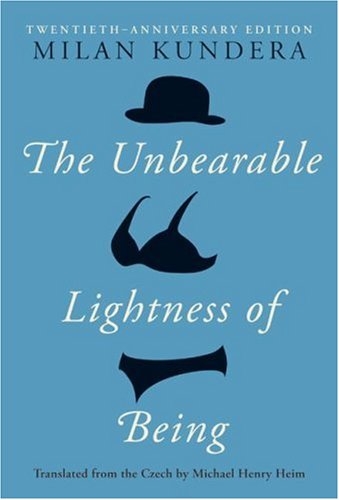
He uses as an example The Unbearable Lightness of Being by Milan Kundera, a book given to him by a quasi-romantic interest, and one which he has tried numerous times to read but has never finished because…he doesn’t like it.

I can relate to this because my brother, you know, the one noted in earlier posts who won’t read used books and never goes to the library, gave me that book as a gift. Now I’m not sure he had read it, so technically it wasn’t a recommendation–and I imagine gifted books raise different existential questions than recommended books. Anyway, I absolutely could not get through it. And I really, really persevered, and was terribly disappointed that I had done so because I ended up finally just closing it with a thump! that’s it!–I cannot read another word of this unintelligible rot.

Here’s a confession, though–I feel like this is a book I should read, and I do feel that I will pick it up again one day and get through it. And maybe even understand it.

But what about when I am recommending an entire year’s worth of books for my book group members to read? That’s a lot of pressure! What if they don’t like what I’ve chosen? Yikes!

Well, we all know that you can’t please all the people all the time, and over the years some members have, believe it or not, disliked some of my choices. I know, I know, hard to believe but there you are. Anyway, I take the advice that I would give to anyone else. I use criteria by which to judge a book–for instance this year we are reading contemporary prize winners–and if I’ve stuck to that criteria and if I find the book is literary and worth reading–and worth discussing–then I really don’t worry about whether someone likes it or not.

You see, I don’t think reading a book should necessarily be easy, and I don’t think books worth reading should necessarily be likable. I think books should makes us think, make us feel, make us wonder, make us question, make us…change.

Yes, I will definitely pick up The Unbearable Lightness of Being again–and I will finish it!

What do you think? Is it important for you to like what you’re reading?

The Slap by Christos Tsiolkas


The Slap won the Australian Literary Society Gold Medal. Really?

The Slap was shortlisted for the Miles Franklin Award and the Colin Roderick Award. Really??

The Slap is currently on the long list for the Man Booker Prize. Really???

I’m sorry, but I just don’t get it. I found myself speed-reading this book to get it over with, and I cannot recommend it at all. Not at all.

Quick plot summary: Somewhere in the suburbs of Australia, a little boy is slapped at a BBQ by a man who is not his father. This event is used by the author as a device to delve into the lives of the novel’s characters, eight of whom become the individual, central focus of a chapter of the book. The slap itself becomes a sort of signifier as each character places his or her meaning upon it and simultaneously takes from it what he or she wants.

Forget the seediness of the characters. Forget the ubiquitous and uninteresting sex scenes. Forget all the drug use. Forget the self-destruction running rampant through the novel. I wouldn’t have a problem with any of this–not if the book were well written. But it’s not. At times I thought Tsiolkas was trying to write a short story in each chapter, threading the slap through them all–to bind them together. But the chapters weren’t interesting enough on their own to survive such a structure.

Instead of using the entire novel to build and develop the life of an individual character, he tried to cram it all into the one chapter devoted to that character’s point of view. The result was tedious and boring. I didn’t care about the characters, and consequently, I didn’t care about the novel.

And I couldn’t help thinking, even as I read the female voices of the novel, that this book just screams out that it was written by a man. When I’m hearing the author’s voice overriding the narrators’ voices, that’s a problem, isn’t it?

Perhaps this novel is meant to be some sort of mosaic or kaleidoscopic look at modern Australian society. Maybe. Again, I find I really don’t care.

This was my “beach read” this summer. Hmm…I need another vacation. How about you? What was your “beach read”?

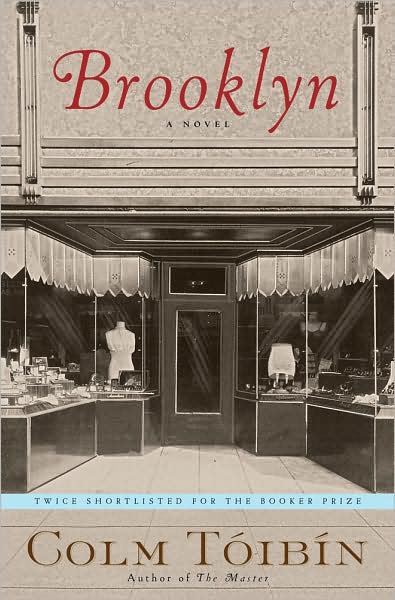
Brooklyn by Colm Toibin


I had come across this title a few times while perusing the long and short lists for award-winning fiction. However, the description–something about Ireland, a priest, a move to New York–put me off reading it. It was while reviewing the Guardian’s article on authors recommending just two reads for the summer that it caught my eye again. I believe Tom Stoppard called this novel “flawless.”

Far be it from me to argue with Tom Stoppard, so I won’t delve into whether I think it’s flawless or not, but I will say it is a touching, thought-provoking, wonderful book. It evoked A Tree Grows in Brooklyn more than once for me, with its descriptions of New York, seen through the eyes of innocence. The atmosphere of the book absolutely captivated me.

Quick plot review: It’s the fifties in Ireland. Eilis’ family decides it’s time for her to make her way in the world, and what better place to do it than in Brooklyn, USA, the land of promise–and where the local Irish priest has many contacts who can help Eilis get settled.

Before she knows it, Eilis finds herself sick as a dog on a ship crossing the ocean.

Toibin is able to render Eilis’ experience so that the reader feels she is going through it herself. But what is so nice, so refreshing, is that after a while I realized that nothing shocking or violent or predictable was going to happen. Eilis was quite successfully making her way in the world, the New World at that.

She does well at work, she has a nice place to live, and she meets and falls for Tony, a sweet Italian boy.

Then an event calls her back to Ireland. I’m not giving anything away–the book jacket tells you this much. What it doesn’t tell you is now the book gets really, really good. No more black and white–grey enters the scene big-time.

One of my favorite books is Old School by Tobias Wolff. The main character does something that made me, as the reader, want to jump into the book and shout “stop!–don’t you see what you’re doing?” I had that same feeling while I was reading Brooklyn; I literally felt afraid for Eilis. I can’t say more without giving some of it away, so I’ll stop here.

Suffice to say, I heartily recommend this book. And with both Tom Stoppard and I recommending it, you’re going to read it, right?

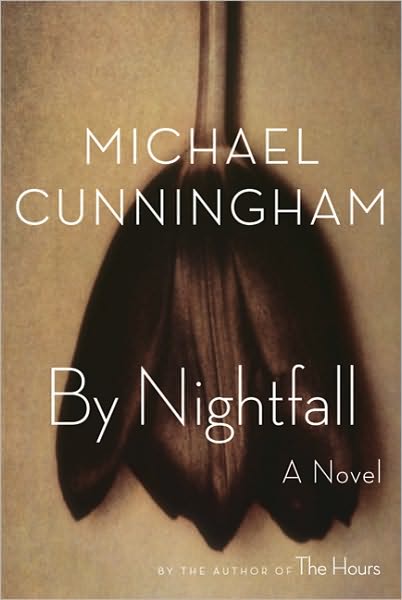
By Nightfall by Michael Cunningham


I recently got my hands on the ARC (advanced readers’ copy) of Michael Cunningham’s new novel, By Nightfall. I know, I know–eat your hearts out. Seriously, don’t despair; you won’t have to wait long as it will be in bookstores in October.

This is a very good book, thoroughly readable. What’s it about, you ask? Well, very quickly:

Rebecca and Peter are living in Manhattan. Of course they are, because Michael Cunningham’s descriptions of that city take the reader there to an extent that rivals Ian McEwan’s ability to transport the reader to (and through) London in Saturday. In my opinion, that’s an achievement.

Rebecca and Peter are middle-aged, or getting there, long-married with a daughter freshly flown from the coop, and are both working “in the arts”–she is a magazine editor; he owns an art gallery and dreams of one day discovering that historically important artist that will transcend time, place, and the mediocrity of life.

Ahh, the mediocrity of life. It looms ever greater as a final destination the more into “middle-age” one advances.

Rebecca’s brother, Ethan, aka the Mistake, or Mizzy, comes to visit. And there begins the tale…Although I cannot recall at the moment why Ethan’s family calls him the Mistake, what is more important is that he conjures for others their own. Mistakes, that is. In life. The takes and mis-takes that lead one to live an absolutely ordinary, mediocre life.

And thus, Peter finds himself at a crux. The effect Mizzy has on Peter (I won’t give away a huge part of the book right here–even though I saw it coming like a train entering a station) is life-altering. Should Peter go off to risk finding the extraordinary? Or should he settle for his everyday, pleasant, but let’s face it, hardly amazing life?

It strikes me that this book is like a coming-of-age novel, but for middle-agers–people who haven’t been innocent for quite a while, but who still harbor some notion of the existence, in themselves or others, of the ideal. And this book is about what happens when they realize that hey, that Paradise is just an illusion. You took a bite out of the apple a long time ago and this is the world that is yours. From a hopeful standpoint, though, that world, your life, although not ideal, can still be wonderful and full of beauty.

How about you? Are you still searching for an ideal life?

Can You Judge a Book by Its Cover?

I threw a small dinner party last night–just a few girlfriends–to celebrate a birthday. One of the guests is an author whose second novel will be released in March 2011. It’s a fascinating education for me, listening to her as she talks about the publishing process.

She showed us all the mock-up cover of her book and asked us what we thought. There was a concern from someone that it looked like a Harlequin Romance novel–decidedly what this book is not.

I thought that it somewhat brought to mind a YA novel, but was, on the whole, rather nice and benign. In other words, it wouldn’t turn me off from buying it. On the other hand, it wouldn’t make me buy it, either. But I really don’t judge a book by its cover. I don’t think…

I mean, who does? And that’s not a rhetorical question. Do we read a book because we’ve picked it up knowing nothing about it but the cover seduces us? Do you do this? I usually read about or hear about a book first, so I go to the library or book store seeking that particular title. I don’t even really register the cover. In fact, of all the many books I’ve read lately (which you know about because you’ve read my WHIRL posts, right?), I cannot recall any of the covers.

Personally, I think the write-up on the back or on the inside flap is more important. And I also like to see who is recommending the book. If it’s an author that I like or respect, that carries weight for me. Or if the book has won or been shortlisted for an award, that counts for me.

What do you think? Can you, DO you, should you–judge a book by its cover?

WHIRL 6

My goodness, I haven’t WHIRLed in ages! It isn’t for lack of reading, I assure you. Hmm…shall I blame World Cup Fever, still rampaging through my house? Yes, that must be it.

So, here I WHIRL, but you may be disappointed for the moment, because I have read so many wonderful books, books that I have on my shortlist for this season’s book groups, so I can’t tell you those titles yet.

For instance, there’s a book by one of my favorite American authors that I just loved, loved, loved! That will definitely be on my list.

Then the book by the author from Zimbabwe–I picked it up and read for two days straight without putting it down. Or so it seemed, anyway. You know, one of those great novels that you can’t pull yourself away from. I may be putting that one on my list.

Tinkers by Paul Harding. This novel won the Pulitzer Prize this year, so I was excited to read it. Hmm…not loving it. And this is the second time I have picked it up–I am somewhat determined to get through it. Somewhat. We’ll see.

The Appointment by Herta Muller. She was born in Romania and won the Nobel Prize, so I was really excited to read her. I am enjoying, not loving, this book, but I just don’t think I will subject my book groups to it. I think I’d meet too much resistance.

Another novel by a Man Booker Prize winner–an English author whom I had never read before. Glad I picked this one up–I think it will end up on my list.

Chronicle in Stone by Ismail Kadare. Kadare is an Albanian author who has received numerous awards, one of which is the International Man Booker Prize, awarded every other year. Although I won’t be putting this book on my list, I am really enjoying it. The story is narrated by a young Albanian boy who is chronicling what is happening to his village during WWII. What I love about this book is the boy’s imagination, which of course hasn’t been squashed by any adult logic. It’s making me look at everything–stones and all–with a new eye.

I have never read any Joyce Carol Oates and I feel like I should! So I picked up Blackwater but got distracted, and then picked up another one, can’t remember the title right now, but then got distracted. Oates is seriously prolific and I know she is loved, but I need some guidance here. Have you read her and can you recommend a title I should read?

What about YOU? Are you ready to WHIRL?

Sporting Advice

It’s World Cup fever in my house. As I blog, New Zealand is on its way to a huge upset of Italy. Hard not to root for the underdog. Right, I may have to rethink this–as I glanced up from my laptop to the TV, the shot was on the crowd–about a dozen bare-chested, overweight New Zealand men, waving their shirts in the air. Not a pretty sight.

But I digress.

For a while we had basketball fever in my house as well. But then the Lakers wrapped it all up in the seventh (rather exciting) game against the Boston Celtics. With all the in-your-face technology available these days, the TV viewer was able to hear what the coaches were saying to the players at time-outs.

Doc Rivers told his team at one critical point that he didn’t want any heroes. That they should play together. As a team.

For some reason that resonated with me. I got to thinking about the question from Elyse, one of my book group members, our very first meeting. What makes a really good discussion?

Well, one thing that helps is when the group converses as a team. That sounds sort of strange, but if you think about it, it’s true. If someone shows up with the mindset of being a hero–of dominating the discussion with her opinion, of being “right” in her interpretation of the book, in short–if someone shows up with an open gob but a closed mind–then the conversation will suffer.

So arrive at your next meeting with an open and curious mind. Really listen to what others say before responding, and try to remark upon–and dig deeper into–what they are saying. This sounds simple but takes some practice. Many members just want to speak what’s on their minds rather than engage with what has been said by someone else. However, following one topic to it’s conclusion before moving on to another can result in a much more fruitful conversation for everyone.

So thanks, Coach Rivers, for the tip. The Lakers, coached by Phil Jackson, went on to take the championship, so let’s give a nod to Coach Jackson also. He has coached more championship teams than any other coach in sports. So, he must be doing something right. To find out more, log onto http://www.amazon.com and see the books he’s written. And if you read any of them, don’t forget to WHIRL!

Literary Masters of the Future

There’s an interesting article in the New York Times today about The New Yorker‘s upcoming issue in which twenty fiction writers under the age of forty are named as “ones to watch.”

Here’s the link:

http://www.nytimes.com/2010/06/03/books/03under.html?hpw

According to the NY Times article, this is a big deal because it’s been over ten years since The New Yorker last named any “writers to watch.” So, looking at that list is pretty interesting. Jhumpa Lahiri was on it, one of my favorite authors. Have you read Interpreter of Maladies or The Namesake? How about Unaccustomed Earth? I have a very funny story about calling into NPR when Michael Krasny was interviewing Jhumpa on Forum. Remind me to tell it to you sometime.

Another fave on that list: Junot Diaz. We all loved The Brief and Wondrous Life of Oscar Wao, but how about his collection of short stories, Drown? Have you read that?

Jeffrey Eugenides was on it (loved Middlesex!), as was Nathan Englander, one of my favorite short story authors.

I am going to take a close look at this year’s list–if the last list is anything to go by, The New Yorker knows what it’s talking about. Perhaps we’ll all read these “writers to watch” in our future Literary Masters book groups!