WHIRLing the Summer By!

No, I have not jetted off to some remote island with no internet access–far from it.  I’ve just been busy, busy, busy reading away–trying to choose the absolute BEST books for the upcoming season of Literary Masters Book Groups and Literary Salons.  So, have I finalized my list of selected books?  No, but I’ve been having fun trying!  Check out some of what I’ve been reading:
The Memory of Love by Aminatta Forna.  This book was shortlisted for the Orange Prize and won the Commonwealth Writers’ Prize this year.  Is it possible to like and hate a book at the same time?  That was my experience.  Set in Sierra Leone, the birthplace of the author, the story involves characters who are trying to come to terms with their pasts–in a place that has recently emerged from a civil war.  There is much to discuss and think about with this book, but I feel reluctant to choose it for my book groups because…well, I think it drags on too much.  I am generally a very patient reader, but I found myself multiple times thinking, “get on with it.”  So, although I think this is a good book with an important story to tell, I’m not putting it on my list.

Red April by Santiago Roncagliolo.  This book won the Independent Foreign Fiction Prize this year.  I liked this book a lot, and I’m torn whether to put it on my list.  Written by a Peruvian author now living in Spain, it tells the story of the incredibly officious and bureaucratic prosecutor Chalcatana investigating a series of murders.  But of course, it’s about so much more than that.  I was so curious after reading it that I did some research on the Shining Path in Peru, and I even started reading Death in the Andes by Mario Vargas Llosa, but I feel these books could be just too grim for my groups.  I recommend Red April for an individual read, though, absolutely.  I haven’t yet finished Death in the Andes.
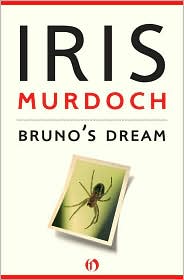
Bruno’s Dream by Iris Murdoch.  I always wanted to read something by Iris Murdoch, and now I have.  I enjoyed this book immensely, but I don’t think it will do for my groups, so I’m leaving it off my list.  Bruno, an old man who resembles a spider (the description of Bruno is worth reading the book for) and who collects stamps, is dying.  Wanting to come to peaceful terms with his estranged son, he calls for him.   I’d love to say that he then weaves a wonderful web in which he catches his son and the other characters (the book has quite a few), but alas, the metaphor is not carried through the book, or if it is, I missed it.  This novel is quite good and well worth reading, but I don’t think it will be on my list.  I’ll have to try another Iris Murdoch novel–yay!

The Sea by John Banville.  This book won the Man Booker Prize in 2005, and John Banville won the Kafka Prize this year.  I loved this book.  It is beautifully written; it carries the reader along on a tide of lyrical prose.  It’s about love, loss, grief, and memory, and it is undoubtedly worth reading.  I’m not sure if it will land on my list because I’m wondering if most people have already read it.  We’ll see.
Man Booker International Prize!

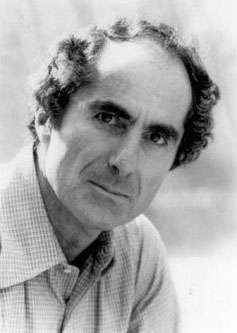
BIG NEWS in the literary world: Philip Roth has won the Man Booker International prize.  He’s the fourth person to do so, joining Chinua Achebe (read Things Fall Apart if you haven’t yet), Alice Munro (one of my favorites), and Ismail Kadare (I read his Chronicle in Stone last summer–really good).  One of my all-time favorite laugh-out-loud books is Portnoy’s Complaint by Roth.  I have never read American Pastoral (I know, hard to believe)–I’ve had it in my “to be read” pile for years.  Perhaps this summer I will get around to it…What is your favorite Roth novel?

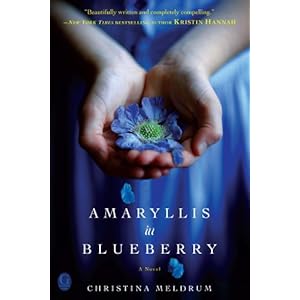
Amaryllis in Blueberry by Christina Meldrum in Book Stores February 8th!

This is an exciting announcement!  You loved Madapple, Christina Meldrum’s debut novel, and you’ve asked repeatedly for more from this incredibly talented author.  Well, the wait is over!  Her new novel, Amaryllis in Blueberry, will be in book stores February 8th–that’s next Tuesday!  Her publisher, Gallery Books, a division of Simon & Schuster, thinks this book will be particularly loved by book clubs.  And who better to decide that than us?  Please let me know what you think of it after you read it!

Here’s a link to a very cool video preview of the book:
http://youtu.be/tfaz9mJ0-IE

And here’s some reviews from critics:
http://www.christinameldrum.com/amaryllis.php#praise

Happy Reading!

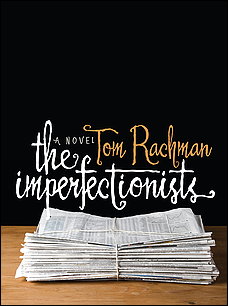
The Imperfectionists by Tom Rachman


If you just want a quick “bottom line,” here it is: read this book. It is so good. Let me warn you, however–it is not a novel in the traditional sense, but rather a series of vignettes taking place in or about the same Rome-based English language newspaper (think International Herald Tribune) at different times, with some characters from each chapter popping up as bit players or as the main attraction of other chapters.

This bothered me at first because I thought I was reading a traditional novel, but also, and more to the point, the writing captured me immediately, and I was so drawn into the first story that I wanted more. Once I realized the structure of the book, however, I went with it and just loved it.

So, rather than review each plot or character, let me say that Tom Rachman can write. The characters, the plots, the themes, the descriptions, the metaphors, everything is a pleasure. Loosely, the time period covers from 1953, when wealthy businessman Cyrus Ott decides to found an international newspaper in Rome, and progresses through to 2007, with Ott’s grandson Oliver at the helm.

The structure of alternating chapters charts the ravages of time and progress on the paper itself, followed by a chapter that illuminates the (sometimes ravaged) lives of those who work for it. Rachman is so good at drawing his characters that you feel you know them in the short time you’re with them, and you also get a feel for what it’s like to be a journalist. Yikes!

Along with the superb characters and their stories is the setting of Rome, a place where I have been but I don’t know well. Rachman knows it well and seems to love it; I was reminded of Ian McEwan’s treatment of London in Saturday. The Imperfectionists made me want to go to Rome!

I highly recommend this book. It’s compelling, it’s clever, it’s original, and it’s a darn-tooting good read. Is it a good choice for a book club? Well, I think it could be tricky because of its structure, but if you have a group that really concentrates and will sit and draw connections between all the vignettes, then it could work. If you have a chatty club that doesn’t focus well or have structured discussions, then I’d suggest you choose a more traditional novel.

Tell me what you think about The Imperfectionists. And Tom Rachman, if you’re reading this, please write another book soon!

Should Your Book Club Read Foreign Bodies by Cynthia Ozick?


My personal book club met the other night to discuss Foreign Bodies by Cynthia Ozick and the reception was extremely tepid. I don’t want to beat a dead horse here, so for my first blog post on this book, look here.

I was a tad surprised at the group’s consensus on this book. Everyone felt it was confusing for no apparent reason, and came away from it saying “huh?” There were eight of us gathered, and the other seven, like me, felt that perhaps they had missed something because they hadn’t read The Ambassadors by Henry James. One member, let’s call her Becky, actually made the effort to read about The Ambassadors on Wikipedia, but came away from it with very little insight–into either book!

Another member, let’s call her Susan, said that she thought the book was all about people who didn’t fit in somewhere–or who were foreign–struggling to belong. Marvin (the horrid father) is Jewish and so hasn’t had entry to many places he desired; his son Julian is a foreigner in Paris, as is his wife. Her foreign status is underscored by the fact that she’s a refugee, and being Romanian, a not very welcome refugee to boot. So, yes, that is that concern running through the story.

Someone, let’s call her Mary, mentioned that Bea undergoes the biggest transformation in the novel. I alluded to her change in my earlier blog post, and I can add here that she succeeds in shedding the suffocating control of her former husband and her horrid brother. Someone, let’s call her Barbara, thought that the former husband was worse than Bea’s brother. Which brings me to another point we discussed:

The lack of sympathetic characters in this book.

Let’s call her Lisa said she did like one person–Margaret, whom Marvin had sent off to the looney bin. The rest of us, however, couldn’t find anyone we cared about (well, maybe Lily a little bit), and wondered if that’s what was wrong with the book. Not that I think the characters have to be likable or sympathetic for a book to be good–I don’t think that at all. But there was something about this book that left us all…unsatisfied.

We then discussed the “group-think” of book critics, and wondered whether Cynthia Ozick was just getting by on her reputation. Most of us liked her writing quite a bit; you’ll remember that in my earlier blog post I said it sparkled. But this novel is not as wonderful as the book critics made it out to be, and that makes me wonder about the book critics!

Now, is it a good choice for a book club? I would say yes IF you read The Ambassadors along with it. Otherwise, I’m not sure I would select it. There are other books out there I would choose first.

Do you disagree? Tell me, what do you think of Foreign Bodies?

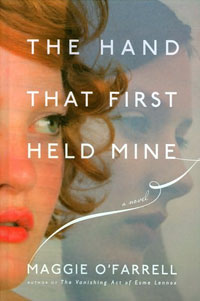
The Hand That First Held Mine by Maggie O’Farrell


Two alternating narratives, one taking place in bohemian London, mainly set in Soho during the fifties and sixties, the other mostly in North London in the present day. Seemingly unconnected at first, the trajectories of the parallel stories will arrive at the same point.

Lexie and Innes are living in Soho, trying to get a fledgling magazine on its feet. They are captivating and compelling characters, as is the time in which they live. We watch them meet, court, work together, grow as individuals, and make what mark they can on London and on history. We get drawn into their lives, but then, just as we’re feeling pretty cozy with them, we switch to the story of…

…Elina and Ted in present day North London. Elina has recently given birth to Jonah, and evidently it was a horrific experience that she almost didn’t survive. I’m not sure what relevance that has to the story (something your book club can discuss!), but we spend quite some time worrying with Ted over Elina’s well-being and stability. We experience the daily reality of new motherhood with her, and see the impact the new baby is having on her and Ted’s relationship. It takes us awhile to realize that it is Ted we should be worrying about, not Elina. What is wrong with him? What are the flashes of memory he’s experiencing? What has he been through that we don’t know–that he doesn’t know?

Eventually the mystery starts to clear, and we can work out what the connection between the two narratives is. I don’t know if I was slow or spot on at this, but even when I was fairly certain I had it all worked out, I still wanted to read on, to find out the whys and the hows and the what nexts. And I think I just wanted more of the characters. I really liked them. In fact…

I quite enjoyed this book. Although let me say up front that the same things I liked about it also annoyed me a tiny bit.

The writing, for instance. Maggie O’Farrell is a terrific writer and some passages were fabulous, really fabulous; I especially liked when she would rewind a scene, taking the reader through it as though we were actually viewing it. I felt like I was watching a screen. She also built a good deal of suspense into the story, and I was sucked into reading late into the night, needing to know more.

But–paradoxically–I found the pace of the novel somewhat slow at times. I only say this because I can imagine some book group members getting frustrated, and, after giving it some thought, I feel any reader of The Hand That First Held Mine has to…just succumb to its timing and rhythms–they are part of the beauty of the book.

Another book group frustration I’m anticipating: the characters aren’t deep enough. Well, I loved these characters, every one. Did I want more of them? Yes. Could I have appreciated more depth? Yes. But these characters are so interesting, I think each one could stand his or her own novel. Again, this is something your book group can discuss.

All in all, this is a worthy novel (it did just win the Costa Award!), and one that I think is good for a book group discussion. If you want “Points to Ponder” for this novel, contact me!

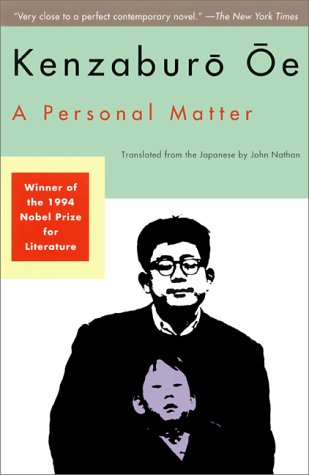
A Personal Matter by Kenzaburo Oe


Kenzaburo Oe won the Nobel Prize for Literature in 1994, but I hadn’t read any of his books until this one. My brother–the one who never goes to the library because he doesn’t like used books–is really into Japanese literature. He gave me a stack of novels last week by various authors, and I chose this one because it was short–only 165 pages.

But those pages really do pack a wallop.

This book is not for everyone. And I don’t think I could choose it for my Literary Masters book groups. Although it’s very literary and there is much to think about, explore, and appreciate, the subject matter is quite painful. The protagonist Bird’s son has just been born with a grotesque deformity protruding from his head. We follow Bird as he reacts to and tries to escape from this shocking reality, and much of the book is very bleak, bordering on kind of sick in some parts.

Yet it’s really good. I found myself looking forward to getting back to it, I think because, along with all the depravity, there is also deep psychological understanding and human compassion in the story. Although Oe taps into our deepest fears, he also illuminates the resilience and courage that we are capable of.

For those who can handle the subject matter and who don’t mind reading something that isn’t, well, pleasant, I highly recommend this book. If you read it, let me know what you think. I am looking forward to my next novel by Kenzaburo Oe. I should go look at that stack of books my brother gave me…

Costa Award Winners by Category


The Costa Awards, the prestigious literary prize formerly known as the Whitbread Awards, has announced the winners of its categories–novel, debut novel, biography, poetry, and children’s book. The Hand That First Held Mine by Maggie O’Farrell has won for the novel category, and I can’t wait to get my hands on it!

The overall winner for the Costa Book of the Year will be chosen from the catefory winners, and will be announced later this month, so stay tuned!

To learn more, go to http://www.costabookawards.com/index.aspx

Coffee and a great book–what’s not to love?

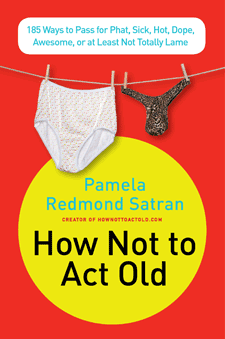
How Not to Act Old by Pamela Redmond Satran


This book is hilarious! A friend gave it to me recently (hmm…was she hinting at something?) and I have been laughing ever since. Comprised of 185 tips on how not to act old, this little gem was written precisely with me in mind, I am sure. Its aim is for anyone over the advanced and senile age of 40, but I swear, it really was written just for me.

Take, for instance, tip #52: don’t yell into your cell phone. How many times have my children accused me of doing just that? Well, every time I’m on my cell phone, actually. And what about tip #32: don’t be proud of being befuddled by technology. Right, I’m going to stop referring to myself as a luddite immediately. Just using the word “luddite” is probably old.

As I was gobbling down each tip as if it were a rejuvenating vitamin sure to reverse the decay and decline that has already set in, I kept thinking, yes, that’s true, that’s right, that’s exactly how it is. I must be old!

Satran has a razor sharp eye and wit to go with it, and I thoroughly enjoyed her book. She also has a blog–from which the book was launched–you can access it at www.hownottoactold.com. You can access it? I’m sure there’s a younger way to say that.

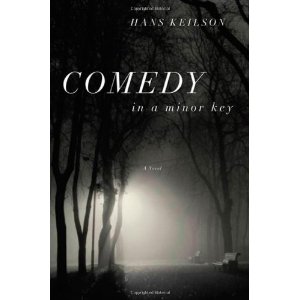
Comedy in a Minor Key by Hans Keilson


Written in 1947 by Hans Keilson, this German novella, translated brilliantly by Damion Searls, is a quick little read that will stick with you for quite some time. The story is simple: Wim and Marie, a Dutch couple, take the decision to hide a Jew called Nico in their home. Although the trio is faced with an extraordinary situation, they endeavor to keep life as ordinary as possible.

Until Nico unexpectedly dies.

I didn’t give anything away there; you find out about his death in the first few pages. But Wim and Marie must now deal with his body, and therein lies the ‘comedy’ mentioned in the title. I must warn you, though: you’ll only laugh if you find the cosmic sense of humor funny.

There’s a lot in this novel for a book club to discuss, but most of it will be quite heavy. If your group is up for an existential journey, then it could be a good choice. If not, I still highly recommend this book for any individual reader–it really makes you stop and think about life and its meanings, or lack thereof. For a more in-depth and wonderful review by Francine Prose of this and Keilson’s other work, The Death of the Adversary, click here: http://www.nytimes.com/2010/08/08/books/review/Prose-t.html